Feeds:
Posts
Comments

Posts Tagged ‘In an Irish Home Recipes’


Brown and white Irish button mushrooms on a tea towel.

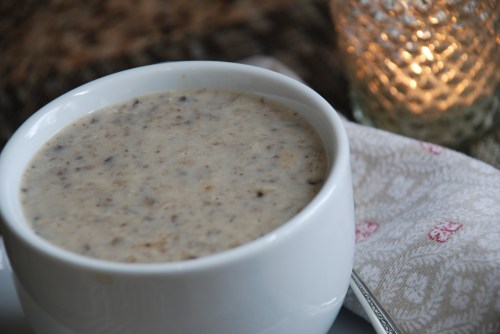
Myrtle Allen's mushroom soup in a white bowl.

The lazy days of summer are well and truly over and everyone in our Irish home is moving back into life lived at warp speed.

The kids are busy with school, sports practices/games, clubs, and homework. Our eldest daughter recently added an after school job to her schedule, which brings great opportunities for personal growth and some very welcome pocket money! My husband is traveling a lot again. And, as for me, I’m holding the whole show together.

On those days when I need a meal that’s quick and easy to make, I am thankful to have Irish Mushroom Soup as one of my go-to recipes. This particular recipe, from Myrtle Allen of Ballymaloe House, is delicious and wholesome and takes all of about 20 minutes to make. What’s more, I don’t feel the need to make anything else to call this supper: a loaf of bread and lashings of good Irish butter make it totally complete.

I’ve adjusted Myrtle’s recipe ever so slightly, God forgive me! I use a yellow onion rather than a load of spring onions and I don’t make a roux (I just pop everything into the soup pot and give it a good, stiff, stir). This soup is absolutely no fuss but it tastes like you’ve slaved over a hot hob (stove) all day.

Enjoy!

Myrtle’s Mushroom Soup

Serves 4

Ingredients

4oz/1 cup onions, finely chopped

2 oz/4 tablespoons butter

8oz/2 ½ cups mushrooms, finely chopped, (I use a variety of mushrooms)

salt and pepper

2 tablespoons plain flour

8oz/1 cup milk

80z/1 cup chicken stock

Directions

1. Sweat the onions in the butter until soft (5 minutes approximately).

2. Stir in the mushrooms and seasoning and cook for 1 minute.

3. Add the flour and cook for 2 more minutes, stirring well.

4. Remove from the heat. Blend in the milk and stock. Return to the cooker and bring the mixture to the boil, stirring all the time.

5. Adjust the seasoning (my two cents here: using a hand-held blender, blend until you have a consistency you like) and serve.

Additional Notes, Related Articles & Credits:

* If you have a few minutes, watch this interesting interview over at the Irish Food Channel with Myrtle Allen regarding Irish food production and why Irish food is so delicious.

** Read the Wall Street Journal’s article on how Myrtle Allen helped transform “fine Irish cuisine” into a bona fide culinary movement.

*** Here are some fab mushroom hunts in Ireland: Mushroom hunt with Bill O’Dea at Killruddery House and the Annual Mushroom Hunt & Lunch at Longueville House, Cork.

**** The Northern Ireland Fungus Group has lots of advice on which mushrooms can be eaten and organises annual fungal forays. See http://www.nifg.org.uk for details.

***** For other delicious soup recipes, check-out my Autumn Vegetable Soup, Leak and Potato Soup, Pea & Mint Soup, and, last but not least, my Good Old Fashioned Chicken Soup.


Read Full Post »

Irish lasagna in a baking dish with a green side salad

I’m sure every family has its own version of this classic Italian dish…but I promise you, you’ll want to give this recipe a try sometime.

In our Irish home, we table-tested many lasagna recipes over the years before realising we are truly, deeply, and madly in love with this Irish version dreamed up by my sister-in-law Ann. Thanks Ann!

What makes this recipe the clear winner for us is the absolute deliciousness of the dish. It’s comforting, without being too heavy, and it has lots of flavour. When paired with a side salad and a slice (or two) of homemade garlic bread, everyone leaves the table happy and satisfied. What’s more, my girls and sweet husband will take a slice in their lunch the next day. Don’t you just love it when a supper can become an easy-to-make lunch too?

Another reason Ann’s Weeknight Lasagna is a favourite in our home…it’s just so easy to make. Unlike traditional lasagna, there’s no béchamel sauce (also known as “white sauce” in Ireland) in this recipe. Instead, whole milk ricotta is added directly to the meat sauce, saving time but not scrimping on flavour. And, this recipe calls for precooked noodles, so there’s no hassle and time commitment there either. This recipe is just a win-win-win all around.

Ann’s Weeknight Lasagna can be assembled up to a day in advance and baked right before dinner (great for exam week or anytime everyone is helter skelter). It is great as a family meal, but it is also impressive enough to serve guests. Add a bottle (or two!) of vino, light some pillar candles, turn on some Italian music, and you’ve got the makings of a fun dinner party. And, you know I hate to be a Delia-Downer but I am ever-practical, if you’re looking for a meal to deliver to someone-in-need, this is the perfect, delicious, easy-to-make dish.

Oh, this weeknight lasagna, Irish-style, is good for so many reasons. It may not be your mum’s recipe, but all I can say is “try it…you’re gonna like it!”

Weeknight Lasagna à la Ann

Serves 8

Ingredients

1 tablespoon olive oil

1 onion, diced

450g/1 pound lean minced beef (hamburger meat)

1 pinch of dried basil, oregano and rosemary

2 x 680gram/48 ounces spaghetti sauce

8 oz whole milk ricotta

227g/80z chopped mushrooms

box of oven ready lasagne pasta

16oz shredded mozzarella cheese

Directions

1. Preheat oven to 180°C/350°F degrees.

2. Heat the olive oil in a large frying pan over moderate heat. Add the onion and sauté until translucent.

3. Add mince, being sure to break it up into small pieces. Add oregano and rosemary to taste. When the mince is cooked thoroughly, drain off any excess fat, then add the spaghetti sauce, mushrooms and the whole milk ricotta. Mix well and remove from heat.

4. Into a 9 x 13 x2 inch-baking dish, spoon a thin layer of mince sauce. Top with a layer of lasagne noodles, do not let the noodles touch each other or the sides of the baking dish. Next add a layer of shredded mozzarella. Then top with lasagna noodles, and another layer of sauce. Repeat layers as before, until your top layer of sauce is just about even with your baking dish. Sprinkle with the last of the shredded mozzarella.

5. Cover dish with aluminum (tin foil) and bake in the oven for 30 minutes until bubbling and golden brown. (Alternatively, refrigerate until ready to use).

6. Remove the foil and bake for another 10 to 15 minutes or until hot and bubbly.

7. Remove from the oven, top with some finely grated Parmesan, if desired. Let sit for five minutes before cutting.


Read Full Post »

Irish Cup of Tea

The Irish love their tea. Hot tea, I should add…because in Ireland, even on the warmest day, tea is never served cold.

And, in an Irish home, tea is typically drunk throughout the day: with breakfast, at elevenses (a morning snack, typically served around 11am), at 3pm, after dinner and, of course, any time a friend calls in (stops by).*

If you are invited to an Irish home, you can expect to be offered a cup of tea within a few minutes of crossing the threshold. But there’s a catch…you, the guest, are not allowed to accept…at least not on the first ask.

Confused? Don’t worry…it’s an Irish thing! And, having learned the hard way, I’m happy to offer some friendly advice.

So…here’s the skinny: if you are offered a cup of tea while in someone’s home…it is polite (dare I say “expected”) that you say “no” with the first ask.  Even if you’re dying for a cup of tea…just say “No thanks.” and wait.

I say “wait”  because in an Irish home you will be asked a second time. And, funny enough, “no” is what you should say the second time you are asked. Strange? I know, but it is not polite to say “yes”…yet.

It is only after the third ask, and there usually is a third ask, that you may finally say, “I’d love one thanks.” or “That sounds great.” Then your host/hostess will put on the kettle and you’ll be on to another round of questions about milk, no milk, strong or weak, biscuit or no biscuit. The Irish and their tea…it’s serious business!

The absolute exception to the above happens only in situations where you and your host/hostess are on very friendly terms. This being the case, you may on first ask be completely honest and say “yes” straight away.

Conversely, it is important to remember that when an Irish person comes to your home, they will expect you to offer them a cup of tea…three times! You should anticipate that your guest will say “no” the first time you offer and the second time too.  But the third time, you may finally hear a “yes”, in which case you are off and running. Hmmm…now you need to know that there are many different ways to serve tea in Ireland. But, before I get too far ahead of myself, let me wrap the above up by adding that if your guest says “no” the third time you offer tea, you can drop the matter altogether and know you’ve done your part to be polite.

So now…here’s a quick guide to serving and making the perfect cup of tea in Ireland.

Serving Tea in Ireland

There are many ways to serve tea in Ireland and though it is up to you to decide for yourself what you like best, you must also take into account the preferences of your guests. The things you will need to consider include: tea cups or mugs, jug of milk or tetra pack, pre-warming the tea pot and cups or not. Much of this depends on how well you know the person you are having tea with. For example, a tetra pack of milk on the table is an absolute disgrace, unless you are the best of friends or you are serving a workman doing a job in your home. Did you just do a double take on the last bit of that previous sentence? If so, you read it right. In an Irish home it is not uncommon to offer your painter, electrician or gardener a cup of tea while they are working away. And they may sit at your table and even ask you for a biscuit (a cookie)!

Some guests like the first draw of tea, especially in the evening, while others prefer their tea strong enough to trot a mouse on (meaning it is really black and strong). Some people pour milk into their cup before they add the tea, while others do the reverse, and some take no milk at all. Still others prefer a squeeze of lemon, some sugar, or both. These are questions you should ask your guest as your are serving them. And, while this all sounds like a lot of trouble, it actually happens so fast and naturally that after the first few times you don’t even think about it any more.

And finally, some Irish people really prefer to take their tea in a china cup with a saucer while others prefer a mug. Generally, here is how I do things in my Irish home: guests I want to impress get a china cup and saucer; guest with whom I am very friendly get a big, comfortable, mug (so do my children); my husband gets a china mug; and workmen who come to our home get my special “workman” mugs (yes, I have mugs especially for the men who come to fix things in our home!).

Making Tea

To make the perfect cup of tea, I take my lead from the Master Tea Blenders at Bewley’s Tea.

  • Boil some fresh water then use a little to warm the teapot and also your cup. After a minute or so, strain the water off into the sink.
  • Pop your teabags into the teapot – how many is up to you but one per cup is recommended. (I usually add two tea bags to my 4-6 cup pot)
  • Add freshly boiled water straight away, then let the leaves infuse for 3-5 minutes.
  • Remove the teabag, give the tea a quick stir, offer the first draw to whoever takes their tea light, add some milk, sit back, sip and enjoy!

Additional Notes, Related Articles & Credits:

* Statistically speaking, Irish people are the second biggest consumer of tea per person. Turkey comes first and Great Britain is behind us in third. To see more visit theatlantic.com.

Teaology with Denis Daly, Master Blender at Barry’s Tea at http://youtu.be/H79Rhn7LGY8

An excellent radio documentary on tea in Ireland on Newstalk 106 at http://www.newstalk.ie/player/podcasts/Documentary_on_Newstalk/Newstalk_Documentaries/58458/0/documentary_on_newstalk_tea_please/cp_10

More about the history of tea in Ireland at http://www.netplaces.com/irish-history/family-and-food/a-cup-of-irish-tea.htm

Irish Tea and Biscuits at http://www.irelandfavorites.com/irish-tea-biscuits/.html

The worst mistakes Irish people make when brewing a cup of tea at http://www.dailyedge.ie/barrys-tea-master-tea-brewer-tips-1480207-May2014/

My favourite teapots are sold at Avoca Handweavers, see them here.

Information about hospitality and the Brehon Laws is here

And, lastly, another Father Ted video showing the strong and very funny culture of tea in Ireland:

Read Full Post »


Screen Shot 2016-03-28 at 11.27.28 PM

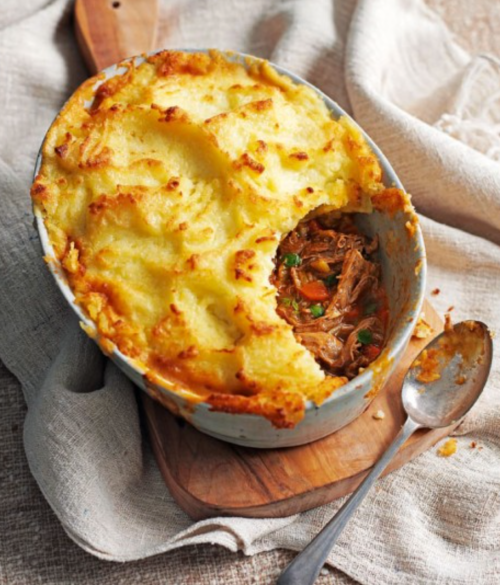
Photo Credit: Deliciousmagazine.co.uk

We feasted gloriously on Easter Sunday but, when the last dish was dried and the bits and bobs were put away, I realised we had enough leftover roast leg of spring lamb to make a second meal out of. Which got me to thinking…what to do…what to do?

Lamb Biryani sounded good…so too did Lamb Ragu…but it was good old-fashioned Lamb Shepherd’s Pie that eventually won me over.

Donal Skehan’s Hand Me Down Shepherd’s Pie recipe, posted over at Deliciousmagazine.co.uk, looked so simple and so delicious that I knew in an instant it was the best way to make “no waste” of our Easter Sunday feast.

If you take a quick look at the long list of ingredients, don’t be put off…it’s very likely you already have everything in your presses (cupboards) and fridge. In fact, I had frozen leftover mash potatoes in my freezer (!), so I was able to skip that step in the recipe below.

My family really enjoyed this dish. I’m going to take a guess that you and your family will too.

Enjoy!

Hand Me Down Lamb Shepherd’s Pie

Serves 6

Ingredients

1 tablespoon olive oil

1 large onion, finely chopped

2 carrots, chopped (I added one more)

2 celery sticks, finely chopped (I added one more)

3 garlic cloves, finely chopped

1 tablespoon fresh thyme leaves

75ml red wine

500g leftover slow-roast lamb, shredded (I diced mine)

100ml lamb or chicken stock

2 tablespoons Worcestershire sauce

3 tablespoons tomato ketchup

1 tablespoon tomato purée (paste)

800g floury potatoes, cubed

3 tablespoons butter

2 large free-range egg yolks

25g grated parmesan, plus extra for sprinkling

Directions

1. Heat the oven to 200°C/fan180°C/gas 6.

2. Heat the olive oil in a large frying pan, then gently cook the onion, carrots, celery and garlic for 10-12 minutes until tender.

3. Add the thyme and red wine, then simmer for 2-3 minutes.

4. Add the leftover lamb, stock, Worcestershire sauce, ketchup and tomato purée, then season. Simmer gently for 15 minutes until the mixture has reduced. (I added the leftover peas from Easter Sunday dinner here)

5. Put the potatoes in a large pan of cold salted water, bring to the boil, then simmer for 12 minutes or until tender when pierced with a fork.

6. Drain, return the potatoes to the pan and mash until smooth. Beat in the butter and egg yolks, then stir through the grated parmesan.

7. Spread the lamb mixture in a 1.5 litre ovenproof dish and top with the mash. Sprinkle over a little extra parmesan and bake in the oven for 20-25 minutes until golden on top and bubbling.

Additional Notes, Related Articles & Credits:

* Though the photo shows it, the recipe does not call for peas. I added them anyway and they really brightened the dish up beautifully.

** How to freeze leftover mashed potatoes, from thekitchen.com.

*** Roast Leg of Lamb Recipe from inanirishhome.com.

**** Here’s my traditional Shepherd’s Pie Recipe.


Read Full Post »


When the tag line of your blog is “What Life is Really Like Behind the Hall Door“, you have to take stock of what’s happening in your life, from time to time, and reflect on whether or not you’re being honest with your readers.

And, well, I took stock of my life last week and it wasn’t pretty. To start with {and that’s all I’m going to write about today}, my entire family have been Lenten Slackers this year.

Tis true.

For the first time ever, we have not participated in the season of Lent: a period of 40 days (beginning with Ash Wednesday and ending with Easter Sunday) when members of the Catholic faith follow the three traditional pillars of Lenten observance: prayer, fasting and almsgiving.

When I suddenly realised we had basically forgotten: 1) to give up something; 2) were only occasionally refraining from eating meat on Friday {a total accident, btw}; and 3) weren’t giving alms/putting money in our Lenten collection box…I was shocked.

Don’t get me wrong, we are not amazingly fabulous Catholics…not by any stretch of the imagination…but we have always tried our best to follow the tenets of our religion. And Lent has never been a problem for us before…ever.

So, why did we fall away from the fold this year?

I chalk it up to two things:

  1. We haven’t been great about going to church on Sunday lately.
  2. I was horrendously sick for six weeks, which coincided with the first few weeks of Lent.

The first problem (not going to church) is the “real” problem. If we’d been going to church, or if the family had gone without me when I was sick, we would have been reminded from the altar to stay the course of Lent.

So why have we stopped going to church? I can chalk it up to two things:

  1. We haven’t been inspired by our parish priest for a long time.
  2. Our lives have gotten so busy that we’ve stopped setting aside time for faith.

If I’m honest, this crisis of faith is long in coming. I remember two years ago visiting with the Sisters of our local Carmelite Monastery and asking for guidance. I could feel my family slipping away from attending Sunday service even back then and I went for good counsel. I was told, “Don’t give in to the temptation…consider it your gift to Jesus for giving up his life for you …for all of us.”

I held on to that thought for a long while…even going to church without the rest of my family many times. Then I stopped going when I got sick and didn’t go back when I felt better. It wasn’t until I was looking at blog posts from previous years {mostly the Lenten Challenge posts} that I realised what we were doing…or what we were not doing.

Thankfully, Lent is not over yet. There’s still time for me to get my family back on track. In fact, this week, Holy Week, is the most important week in the Catholic religion….which means, if there was ever a time to hit our reset button now is the perfect time.

Thursday, Friday, Saturday and Sunday are known as the Sacred Triduum in the Catholic Church. It is a time when we consider and celebrate the mysteries of salvation accomplished by Jesus in the last few days of his life on earth.

Holy Thursday is when we commemorate the Last Supper of Jesus and his twelve apostles. It is at the Last Supper that the sacrament of Holy Communion was established.

Good Friday is the day we commemorate the Passion and death of Jesus. It is a somber day. The sale of alcohol is illegal in accordance with The Intoxicating Liquor Act, which was introduced in Ireland in 1927. And Catholics between the ages of 21-60 are meant to fast, eating just one meal in the day and no meat is to be eaten at all.

Holy Saturday is all about quiet, contemplative, anticipation. Outside our Churches a new fire is blessed, signifying our coming out of the dark and entering into the light. New water will be blessed too and sprinkled over us at church as a reminder of the waters of our baptism.

Easter Sunday is a Holy Day of Obligation in the Catholic Church. It is the day we celebrate the resurrection of Jesus from the dead. It marks the end of Holy Week, the end of Lent, and the beginning of the new liturgical year. In Ireland, Easter morning is a time for going to mass and the rest of the day is spent enjoying a family meal, usually spring lamb or baked ham, and chocolate eggs.

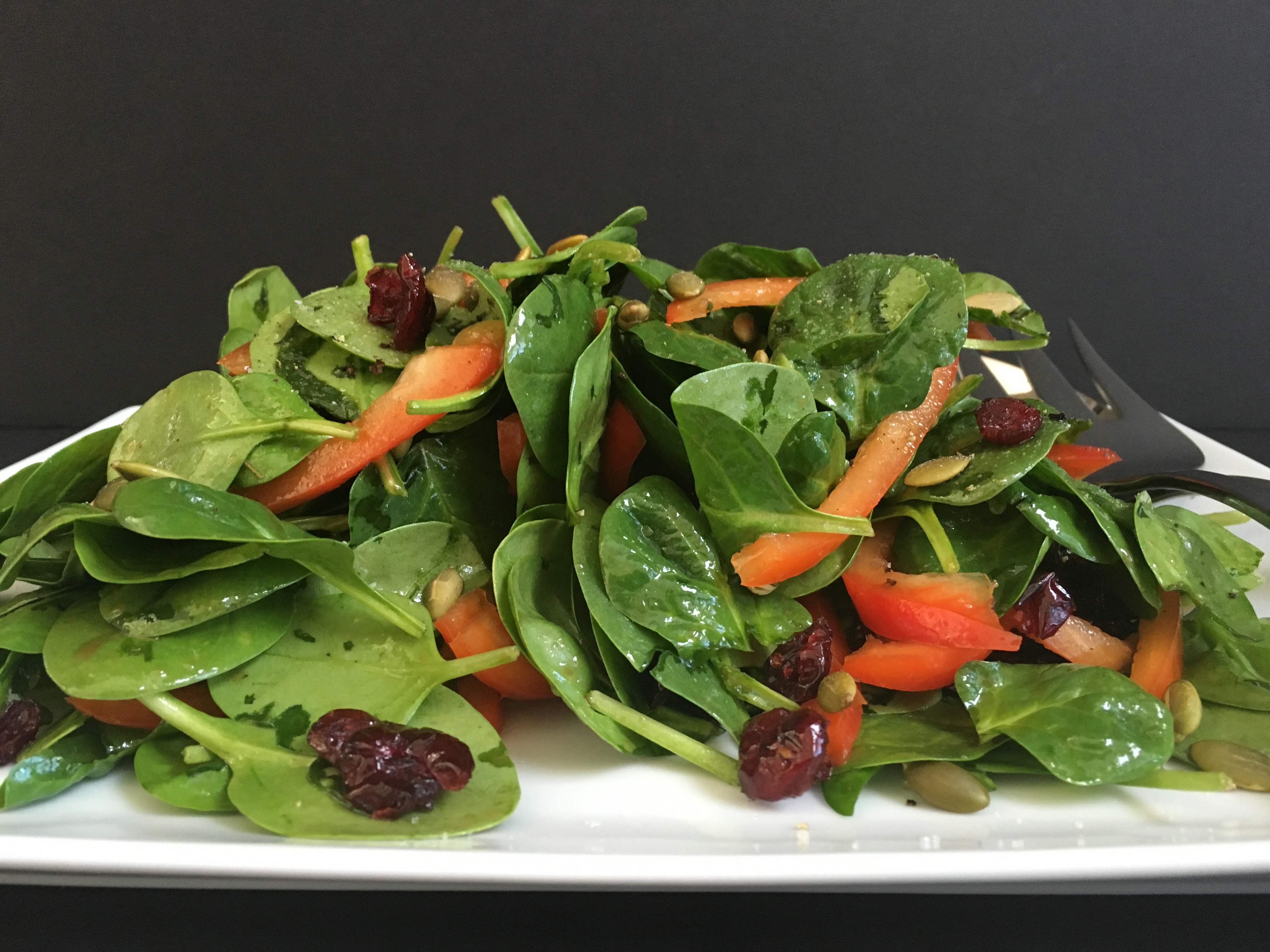
And there you have it Dear Readers…In an Irish Home: What Life is Really Like Behind the Hall Door…warts and all. From us to you, stay strong. There’s only one more fasting day to go. And this time, I am all over it! We’ll be enjoying a spinach salad with dried cranberries. What about you?

Spinach Salad with Dried Cranberries

Serves 4 

Ingredients

1.5oz/1/4 cup raw pumpkin seeds

8 oz baby spinach leaves

1/2 thinly sliced red pepper (and/or 1/2 cup thinly sliced red onion)

3oz/1/2 cup dried cranberries

5 tablespoons balsamic vinaigrette

salt and pepper to taste

Directions

1. Preheat oven to 180°C /350°F. Spread the pumpkin seeds in a single layer on a baking sheet and bake until puffed and brown. Approximately 8-10 minutes.

2. To a large mixing bowl add your favourite balsamic vinaigrette, the red pepper (and/or red onion) slices, cranberries, and spinach leaves. Toss to combine well.

3. Top the salad with the pumpkin seeds and serve immediately.

Additional Notes, Related Articles & Credits:

* Catholic Bishops of Ireland Holy Week and Easter schedule for 2016.

** For a quick and easy explanation of Lent visit here.

*** A delicious and foolproof recipe for Hot Cross Buns may be found here.

**** It’s not particular to Lent or Holy Week, but if you want to know more about the Catholic Rosary visit here.

***** Here’s quite an interesting article about Ireland and Holy Week for the past 50 years.


Read Full Post »

There’s so much going on in my Irish home this week that I haven’t got time to whip up another favourite recipe, photograph it, and write about it in time for St. Patrick’s Day ~ oh how I wish I did!

Thankfully, there are many wonderful Irish writers, bloggers, and foodies to turn to in a pinch and it is my pleasure to direct you to some of their websites so you can find something special to serve your family this Thursday (Saint Patrick’s Day of course!).

That said, if you’re new to In An Irish Home, be sure to check out the Recipes section for my favourite “go-to” Irish recipes for breakfast, lunch, dinner, pudding (dessert) and drinks. You won’t be disappointed.

Slán!

Screen Shot 2016-03-15 at 12.11.26 AM

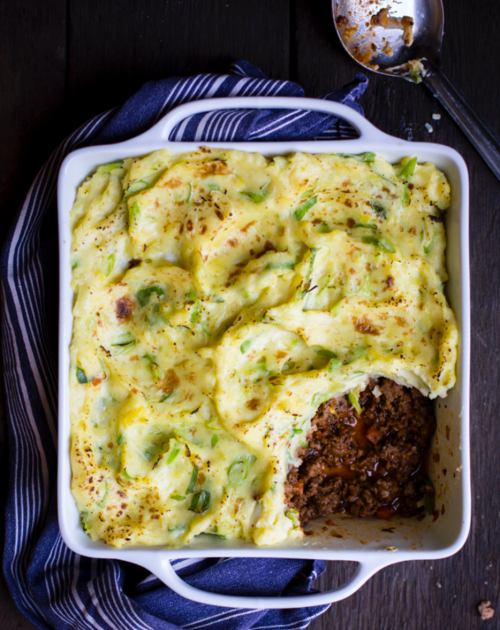
Shepherd’s Pie with Champ Mash from Donal Skehan

Screen Shot 2016-03-15 at 12.12.54 AM

Irish Bacon and Cabbage from Imen McDonnell

Screen Shot 2016-03-15 at 12.57.48 AM

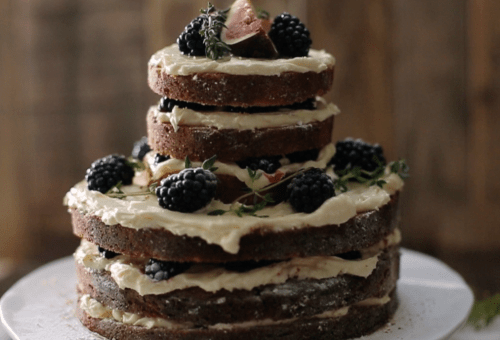
Naked Cake with Meringue Buttercream Icing from Forkful

Screen Shot 2016-03-15 at 1.20.18 AM

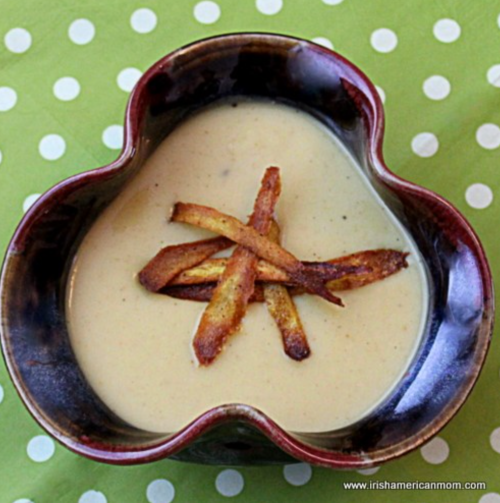
Parsnip & Apple Soup from Mairead at Irish American Mom

Screen Shot 2016-03-15 at 12.18.30 AM

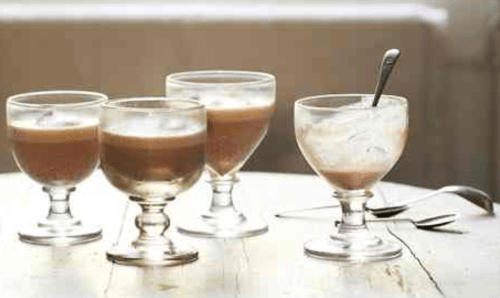
Chocolate Carrageen from Myrtle Allen

Irish Coffee (7)

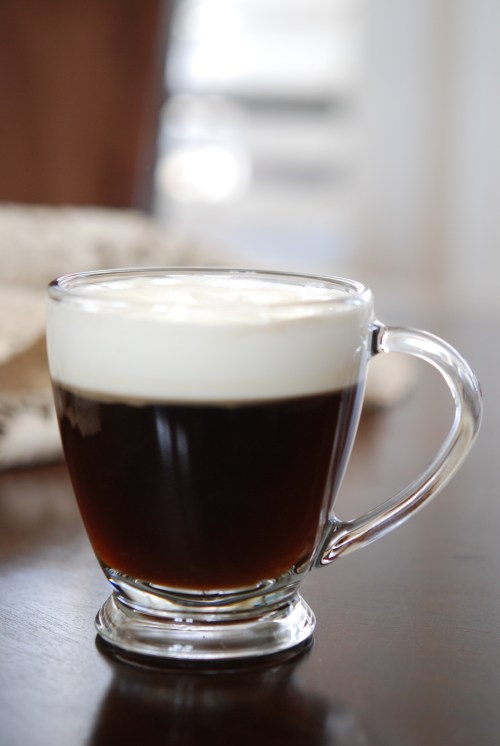
Irish Coffee from inanirishhome.com


Read Full Post »

DSC02922

After staying up late last night to watch the Oscars (by the way…didn’t Saoirse Ronan look stunning in her emerald green Calvin Klein gown?), I’ve been really dragging and wanting to eat up every sweet (biscuits/candy) in the house!

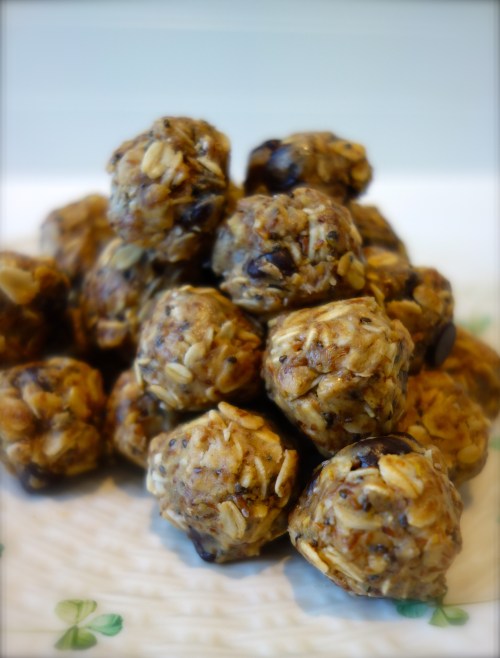
Around lunchtime, I decided to make these No Bake Energy Bites and snack on them instead. Made of peanut butter, oats, chocolate, and a few other simple ingredients, they are very tasty.

My two daughters sometimes whip up a batch when they have friends over. They’re simple to make and it gives them something to do other than looking at their mobile phones (which in my book is always a good thing). Best of all, I like that my kitchen isn’t declared a disaster zone when they’re done and invariably walk away leaving me to do the tidying up. One bowl, a few measuring utensils, and a big spoon…that’s it…couldn’t be simpler.

So, the next time you feel yourself lagging or your kids need something quick and easy to make…give these energy packed treats a try.

No Bake Energy Bites

Makes about 3 Dozen

Ingredients

4oz/1 cup porridge flakes (oatmeal)

2oz/ 1/2 cup ground flax seed

5oz/ 1/2 cup smooth peanut butter

3oz/ 1/2 cup chocolate chips

3oz/ 1/3 cup honey

1 tablespoon chia seeds

1 teaspoon vanilla extract

Directions

1 Stir all ingredients together in a medium size mixing bowl until thoroughly blended.

2. Cover with cling film (plastic wrap) and let chill in the refrigerator for thirty minutes.

3. Once chilled, roll into balls of whatever size you like (mine are about 1” in diameter).

4. Store in an airtight container and keep in the refrigerator for up to one week or freeze and eat straight from the freezer.


Read Full Post »

DSC_0271

I am always on the lookout for Master Recipes. And when I say,  “Master Recipes”, I do not mean “Fundamental Recipes”.

Fundamental Recipes are good building block recipes: think grilled cheese sambos (sandwiches), American-style pancakes, thick-n-hearty Irish soup. You learn to make them by following a series of step-by-step detailed instructions. And, then, once you’ve perfected the basic recipe, you create endless versions of the original recipe. Cookbooks and the internet are chock-full of these dishes.

Master Recipes, on the other hand, are rare and wonderful. Once you find one, you realise it stands out from all the rest. It is exemplar and you wouldn’t dream of changing a thing about it. A Master Recipe becomes a dish you cook for the rest of your life. And, if you are lucky, you hand a collection of Master Recipes down from one generation to the next. They are what Amanda Hesser and Merrill Stubbs, the founders of Food52, call “Genius Recipes”.

My whole life (and I have been cooking since the age of twelve!), I have been collecting Master Recipes. For me they are the recipes that tick the following boxes:

1) They are easy to make.

2) They taste great.

3) They look impressive and can be served to family, friends, and dinner party guests or taken to a special event.

4) Once tasted they almost always elicit a response like “Oh…my…that is delicious! Can I have the recipe?”

DSC_0269

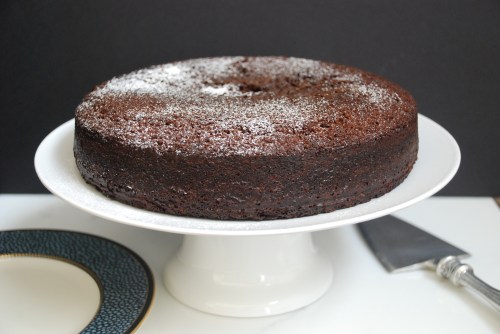
A few weeks ago, I found and made my first chocolate cake Master Recipe. I think I may have danced a little jig across the kitchen after taking the first bite of this delicious cake.

The ingredients include pepper, whiskey and cloves…these really play up the chocolate flavour of this cake. It is incredibly decadent but, surprisingly, not heavy. I like that. And, oh is it moist! (That word cracks my kids up…”moist”.) So many homemade cakes are dry and need cream, ice cream, or icing to make them palatable…not so with this cake. Truly, a dusting of powdered sugar is all that is needed: though, if you really wanted to go all out, some Irish Whiskey caramel sauce might be nice or some sugared red berries.

In the weeks that have passed since I found this recipe, I have made the cake for family, friends, and even taken it to a board meeting. Everyone has loved it. So…get out your springform pan and your Magimix (food processor)…and get baking! I’m sure after trying it, you’ll add this recipe to your collection of Master Recipes too.

Chocolate Whiskey Cake

Serves Eight to Ten

Ingredients

174g/12 tablespoons unsalted butter, cut into 1-inch pieces, more for pan

85 grams/about 3/4 cup plus 2 tablespoons unsweetened cocoa powder

12oz/1 ½ cups brewed strong coffee

4 oz/½ cup Irish whiskey

200 grams/about 1 cup granulated sugar

156 grams/about 1 cup light brown sugar

240 grams/about 2 cups all-purpose flour

8 grams/2 level teaspoons baking soda

3 grams/about 3/4 teaspoon fine sea salt

¼ teaspoon black pepper

⅛ teaspoon ground cloves

3 large eggs

2 teaspoons vanilla extract

172g/1 cup mini semisweet chocolate chips or chopped chocolate

Powdered sugar, for serving (optional)

Directions

1. Pre-heat oven to 180°C/325°F. Butter a 10-inch spring form pan. Dust with 2 tablespoons cocoa powder.

2. In a medium saucepan over low heat, warm coffee, Irish Whiskey, 12 tablespoons butter and remaining cocoa powder, whiskey occasionally, until butter is melted. Whisk in sugars until dissolved. Remove from heat and cool completely.

3. In a bowl, whisk together flour, baking soda, salt, pepper and cloves. In another bowl, whisk together eggs and vanilla. Slowly whisk egg mixture into chocolate mixture. Add dry ingredients and whisk to combine. Fold in chocolate chips.

4. Pour batter into prepared pan. Transfer to oven and bake until a toothpick inserted in the center emerges clean, 55 to 65 minutes. Let cool on a wire rack, then remove sides of pan. Dust with powdered sugar before serving, if you like. 

Additional Notes, Related Articles & Credits:

* The New York Times is my go-to place when I’m looking for really great recipes to try. Here is a list of 30 Fundamental recipes, courtesy of The New York Times, everyone should have in their recipe folder.

** I found today’s recipe (where else?) over at the New York Times. They got it from Marti Buckley Kilpatrick, who adapted it from Dol Miles, the pastry chef at Frank Stitt’s Bottega restaurant in Birmingham, Ala.

Read Full Post »

DSC_0218

In our Irish home there are three of us who love frittatas and quiches…and one who does not.

The one who “does not” is the one we’ve always called “littlest”…even though she is now as tall as myself!. She is also the one in our family who is known as the “pickiest”! So…as long as she doesn’t like frittatas and quiches…I don’t make them and we don’t eat them.

Tired of waiting for my baby girl to change her mind, I decided last week to take a new approach: instead of a frittata or quiche…I baked a savoury tart!

I found a recipe for Yotam Ottolenghi’s Tomato and Almond Tart this summer over at theguardian.com. It looked so yummy that I knew it would eventually appear on our Irish dinner table. I was just hoping we wouldn’t have to wait until “littlest” went to college and her tastebuds grew up.

DSC_0226

As it turned out…my sweet girl LOVED it! And, how could she not? The almond paste soaks up the juice of the tomato and creates the most luscious layer of rich, nutty sweetness…ohhh, so good! It’s the ideal savoury take on “the classic French fruit and frangipane tart”.

The best part, aside from the fact that I can now serve a frittata/quiche/tart-like main with a huge side salad for dinner, is this recipe is easy to make. Healthy, tasty, and easy-to-make (and looks good enough to serve at a dinner party)…this recipe ticks all the right boxes in our Irish home. Give it a try! I think even your “pickiest” child (or adult) will love it too.

Tomato & Almond Tart

Serves 8

Ingredients

140g unsalted butter*, at room temperature

2 large eggs (each 60g net weight), beaten

65g fresh breadcrumbs

80g ground almonds

2 cloves garlic, peeled and crushed

15g picked thyme leaves

100g ricotta

20g parmesan, finely grated

Malden sea salt* and black pepper

320g puff pastry*

sunflower oil*, for greasing

1kg medium tomatoes, cut into 1cm-tick slices (about 10 tomatoes)

12 anchovies in oil, roughly torn (optional)

2 tbsp olive oil

Directions

1. Heat the oven to 220ºC/425ºF/gas mark 7.

2. With an electric mixer, beat the butter until light and aerated. With the machine running on medium speed, slowly incorporate the eggs. If the mix splits, add some breadcrumbs to bring it back together, then carry on adding the remaining eggs.

3. Stop the machine, and work in the breadcrumbs, almonds, and garlic just until everything is combined. Remove from the mixer and, using your hands, gently fold in half the thyme, the ricotta, parmesan and half a teaspoon of sea salt. Set aside.

4. Roll the pastry into two 20cm x 30cm rectangular sheets about 2mm thick. Grease two baking trays with a little sunflower oil and lay the pastry rectangles on top. Spread the almond mixture evenly over the pastries with a palette knife, leaving a 2cm boarder around the edge.

5. Lay the tomato slices on top of each sheet in three long rows, with a fair amount of overlap between the rows (tomatoes shrink a fair bit when exposed to heat).

6. Sprinkle over the anchovies, if using, and remaining thyme. Drizzle the tomatoes with half the olive oil and season with some sea salt and a generous grind of black pepper.

7. Bake the tarts for 15 minutes, reduce the temperature to 180ºC/350ºF/gas mark 4 and carry on cooking for another 10 minutes, until the base is nice and brown. Remove from the oven, leave to cool slightly, then dribble over the remaining olive oil and serve.

Additional Notes & Credits:

* This recipe appeared in The Guardian online on 10 August 2012.

** I used salted butter for this recipe, only one roll of puff pastry, and olive oil because that’s what was in my larder. This recipe still worked beautifully.

Read Full Post »

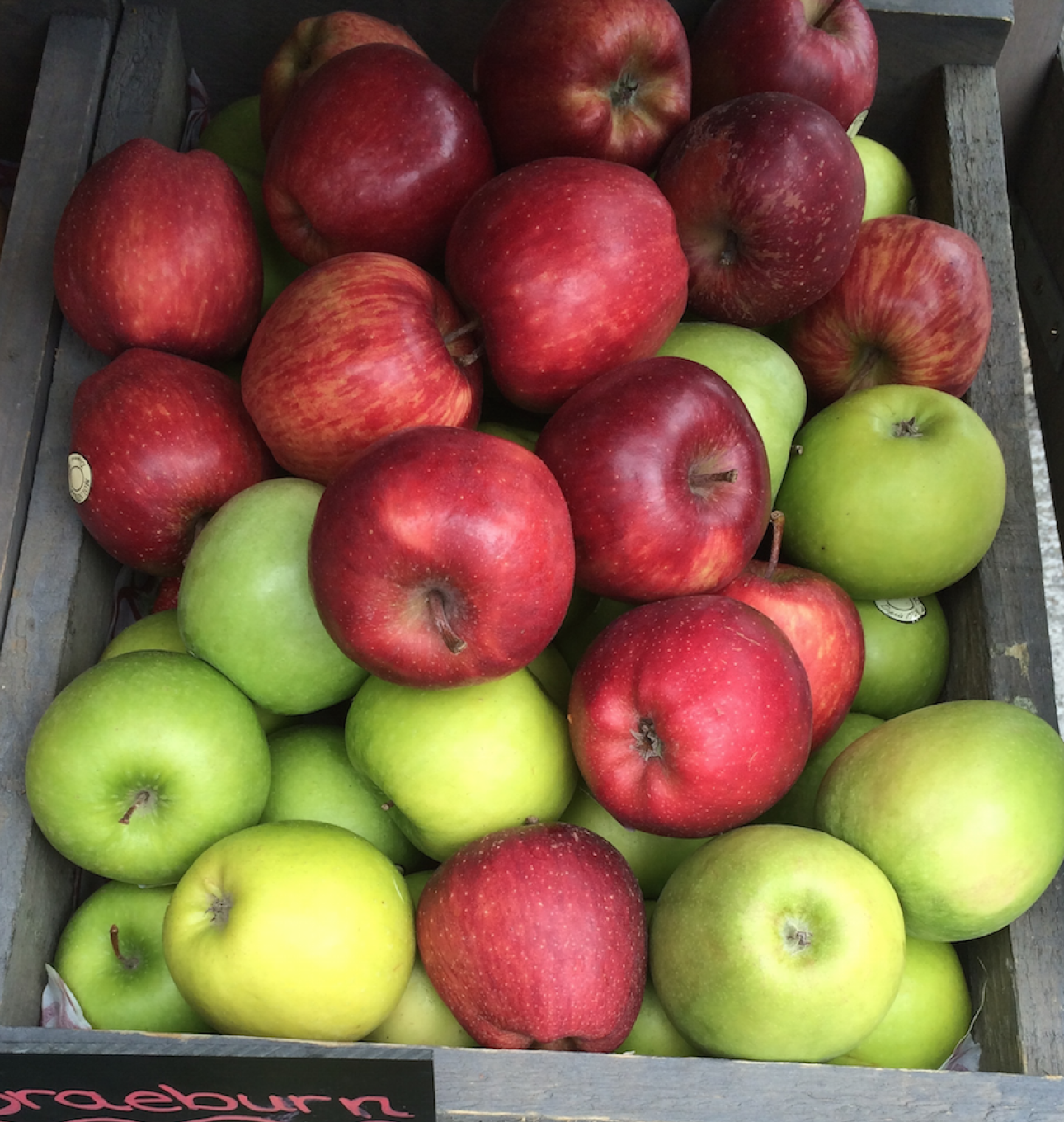
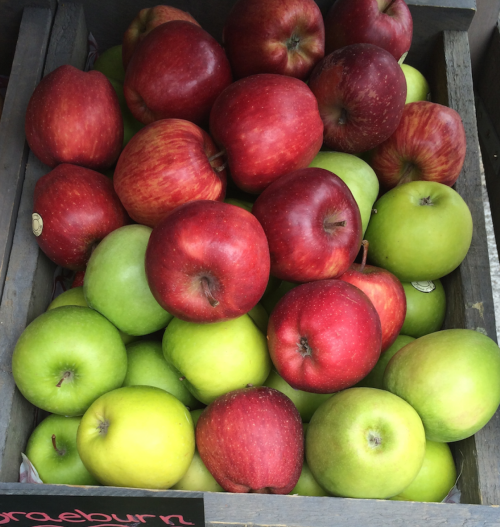
We are smack in the middle of apple season in Ireland…
Screen Shot 2015-10-22 at 9.14.32 AM

And Halloween is just a few days away…

DSC_0038

In our Irish home that can mean only one thing…it’s Apple Cake time! 
Screen Shot 2015-10-22 at 8.46.08 AM

Oh yes…Ireland+Halloween+Apples = Apple Cake in our Irish home and today’s gorgeous recipe comes from the Allen family…Rachel+Darina+Myrtle Allen. This recipe has been in their family for generations and it is delicious to the very core! (Sorry…I could’t help myself!)

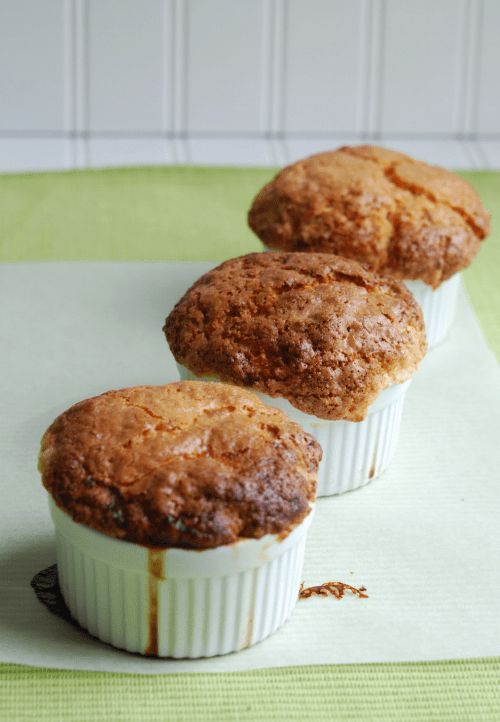
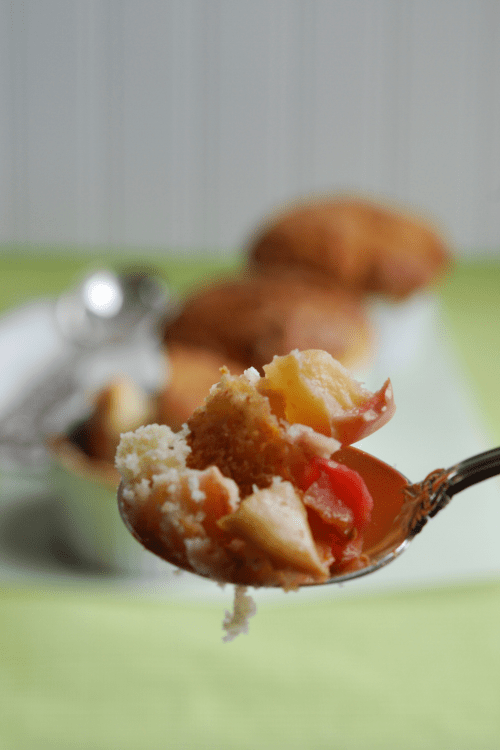
For a change, I deconstructed the Allen recipe and turned it into these adorable single-servings for our brekkie this morning. They would be absolutely lovely served, hot out of the oven, with a scoop of vanilla ice cream immediately following dinner.
Screen Shot 2015-10-22 at 9.22.07 PM

While I prepped and baked this morning, I couldn’t help but wonder how many Irish people remember that Ireland+Halloween+Apples have been closely linked for centuries. Probably not too many anymore.

Screen Shot 2015-10-22 at 10.06.53 PM

In my mother-and-father-in-law’s time, everyone knew: they hadn’t yet succumbed to the ways of other places. In our time, however, we have been snookered into looking at the world globally and taking on board the commercialism of our celebrations…this means Halloween-a-la-America in many places around the world.

But I digress…

A few years ago, while researching my second book, Irish love & Wedding Customs, I came across a collection of handwritten manuscripts from the last century at the U.C.D. Folklore Library. On the pages were story after story about how apples were used on Halloween in celebratory games and for marriage divination.

Weeks later, I came across a painting called Snap Apple Night. It was painted by Cork-born artist Daniel Maclise in 1832. It is said Maclise was inspired to create the painting after attending a Halloween barn party in Blarney, County Cork.

Screen Shot 2015-10-22 at 8.03.27 PM

Look closely at the painting…do you see the young couple sitting on the floor in front of the fire? The young man has his arm possessively around the dark-haired girl’s waist and just near her left hand is a bright green apple. To the right of the two love birds are a group of young men and women bobbing for apples. And, to the left of dead-centre, a man is trying to take a bite of an apple hanging from a string…he’s playing Snap Apple.

The people in the painting are “trick or treating” in an incredibly voluptuous way…a uniquely Irish way…a way we’ve lost sight of. (Sigh.) Can’t you just feel the tension of the lust and love and happiness between the people in Maclise’s painting? Fantastic…don’t you think?

Another Ireland+Halloween+Apples tradition from long ago, one not shown in Snap Apple Night, is a game of marriage divination whereby a person would peel an apple carefully in order to get one long piece of the skin. Then they would throw the skin over their shoulder and check to see what letter it formed on the ground. The letter was meant to signify the first initial of a future spouse.

I adore the old Irish ways and it is such fun to share the traditions and memories of long ago with my children. Much like the Allen girls handing down of a favourite family recipe, I hope that through my cooking and writing, I am handing down something from the past to the current and, one day, the future generations of our family. From our Irish home to you and yours wherever you call home…we wish you Oíche Shamhna Shona Daoibh (Happy Halloween)!

Irish Apple Cake

Serves 6

Ingredients

22g white flour

½ teaspoon baking powder

110g butter

125g caster sugar

1 (organic) egg, lightly beaten

about 50-125ml milk

1-2 cooking apples, peeled, cored and chopped into bit sized pieces (Note: I suggest using 3-4 apples)

2-3 cloves, optional (Note: if serving in ramekins you will need 1 clove per ramekin)

egg wash

Directions

1. Preheat the oven t0 180C/350F.

2. Sieve the flour and baking powder into a bowl.

3. Rub in the butter with your fingertips until it resembles the texture of breadcrumbs.

4. Add 75g of the caster sugar.

5. Make a well in the centre and add the egg and enough milk to form a soft dough.

6. Divide dough in two. Put one half into an ovenproof plate and press it out with floured fingers to cover the base.

7.  Add the apples and the cloves.

8. Sprinkle over some or all over the remaining sugar, depending on the sweetness of the apples.

9. Roll out the remaining dough and put on top of the apples – easier said than done as this “pastry dough” is more like scone dough. (Note: my dough was too sticky to roll out so I just flattened it with my hands and then put it on top of the apples in the ramekins.)

10. Press the sides together, cut a slit through the lid, egg wash and bake for about 40 minutes or until cooked through and nicely browned on top.

11. Dredge with caster sugar and serve warm with Barbados sugar and softly whipped cream.

* From Living Library blog: “Lady Wilde, in her book Ancient Legends, Mystic Charms & Superstitions of Ireland wrote: “It is said by time-wise women and fairy doctors that the roots of the elder tree, and the roots of an apple tree that bears red apples, if boiled together and drunk fasting, will expel any evil living thing or spirit that may have taken up abode in the body of a man.”

* From The Order of Bards, Ovates & Druids: “In a Medieval Irish story Connla the Fair, an Irish prince, fell in love with a beautiful Faerie woman, who arrived on the Irish shore in a crystal boat. She offered him an apple from the world of Faerie; he took the fatal bite, and was hers forever. They set sail for her magical island where the trees bore both fruit and blossom, and winter never came. There they ate an ever replenishing stock of apples, which kept them young forever. An Otherworldly apple tree magically makes music which can dispel ‘all want or woe or weariness of the soul’. In Irish lore, the God Óengus offered three miraculous apple trees from the magical woods, Bruig na Bóinde (New Grange), as a wedding gift for one of the Milesians. One was full in bloom, one shedding its blossoms, and one in fruit. The deliberate felling of an apple tree was punishable by death in ancient law).

* The old Irish tree list here and a brief history by Irish forester, Fergus Kelly, speaks directly to the history of old Irish trees, including the apple tree.

* The secret steamy history of Halloween apples over at NPR.og.

Read Full Post »

« Newer Posts - Older Posts »