Feeds:
Posts
Comments

Archive for the ‘Recipes’ Category

Yesterday was quite the day. Hurricane Ophelia battered the Irish countryside with wind gusts up to 170 km/h and heavy rain. Hundreds were left without water and power, many roads were blocked by debris, and three people lost their lives. Today a massive clean-up operation is under way.  Thankfully no harm came to those in our Irish home…and I hope the same is true for you and yours.

RTE Radio One and Met Éireann were fantastic company while the storm raged: entertaining and informing us all day long. Repeatedly we heard things like, “stay off the roads”, “secure your wheelie bins/trampolines”, “stay indoors {and watch The Lion King?!}”, “avoid coastal areas”, and “don’t swim in the sea”. Yes, there were some, dare I say “eejits”, out there swimming and kite surfing in the middle of the hurricane!

Overall, the news reporting was good, old-fashioned, practical. I love that about the Irish: as a whole, they rarely get hysterical and they mostly see the funny side of things.

Case in point…a woman called Joe Duffy’s Liveline yesterday to report “it’s windy here, Joe, good for the drying!”. Only an Irish mammy can be cute {smart} enough to turn a hurricane into a laundry drying exercise. My phone buzzed all afternoon with images sent by friends…thanks to Instagram’s #Ophelia.

Screen Shot 2017-10-16 at 4.41.44 PM

Between the fits of giggles and quick messages back and forth, I did manage to eek out a dinner of roast carrot and cumin soup, with a side of bread rolls made from leftover pizza dough {many thanks to thekitchn.com}.
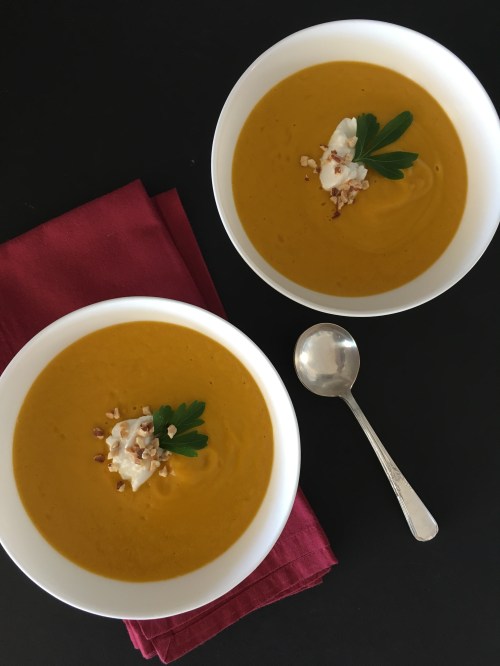
Two white bowls filled with roast carrot and cumin soup

Cumin and roast carrots go beautifully together. In this soup, the cumin provides warmth and fragrant notes, while the roasted carrot adds a hint of sweetness and smokiness. This was and is the perfect stormy-weather meal.

Roasted Carrot and Cumin Soup

Serves 6

Ingredients

600g/1¼lb carrots, chopped

2 tablespoons olive oil

110g/3/4 cup onion, chopped

150g/1 cup potato, skin left on and chopped

30g/2 tablespoons butter

1 teaspoon cumin

1.2 litres/4 cups chicken stock

pinch of sugar

salt & pepper to taste

yogurt, crème fraîche or cream to garnish, optional

toasted almonds to garnish, optional

sprig of parsley to garnish, optional

Directions

1. Preheat oven to 200°C/400°F.

2. Place carrots in a large bowl, drizzle with olive oil, and season well with salt and pepper.

3. Spread carrots in a single layer on a baking sheet. Roast, uncovered, in the oven for 20 minutes or until fully cooked and starting to caramalise. Watch carefully, a little color makes the carrots sweet…too much color and they will taste bitter. Stir occasionally. Remove from the oven and set aside.

4. In a saucepan, melt the butter. When it foams, add the onion, potato, cumin and sugar. Cover with a piece of parchment paper and a tight fitting lid. Leave to sweat gently on low heat for about 10 minutes.

5. Remove the lid. Discard the parchment paper. Add the roasted carrots and stock. Bring to the boil for 5 minutes.

6. Pour everything into a liquidizer (blender) and purée until smooth. Taste and adjust seasoning.

7. Serve with a garnish of cream, crème fraîche or yogurt, parsley and toasted nuts.

Additional Notes, Related Articles & Credit:

* Fun carrot facts can be found here, here, and here.

** Growing carrots is easy. Learn how to grow them in your home… here.

***Gorgeous carrot photos (carrot porn!) can be seen over at Pinterest.

SaveSave

Read Full Post »

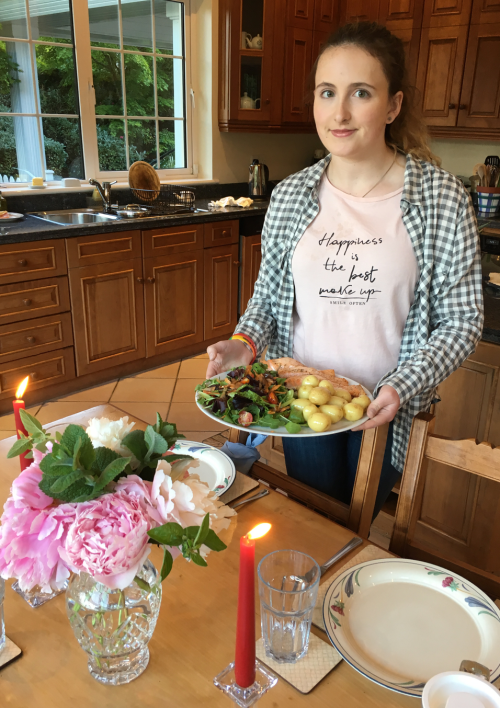
Looking for a delicious recipe for a busy mid-week supper? This Oven-Roasted Salmon may be your answer. It’s so easy to prepare, a child can do it. In fact, both my daughters learned to make this dish over the summer.

Screen Shot 2017-10-04 at 9.47.37 AM

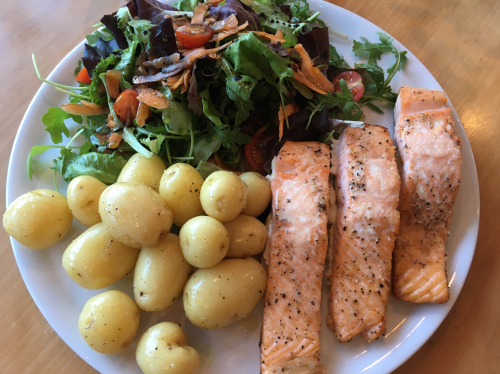
A quick wash of the salmon, a squeeze of lemon, a pad of butter, a dash of salt and pepper, pop it into the oven for 15 minutes and you’re done. If you have the time or energy to jazz it up, play with the herb and fat combinations: sometimes I replace the butter with olive oil {or use both!} or I sprinkle some parsley, dill, tarragon, or lemon zest on top.

Oven roasted salmon, boiled potatoes, and a green salad on a white plate.

If you need another reason to make this recipe, consider this: salmon is a superfood. In our busy Irish home, I’ll take every opportunity to get good nutrition into my family. Salmon contains significant amounts of omega-3 fatty acids {which support heart and eye healthy}, and it is an excellent source of vitamin B-12, vitamin D and Selenium.

Oven-Roasted Salmon

Serves 4

Ingredients

4 x 3oz salmon fillets

1/2 lemon

4 pads of butter

salt and pepper to taste

Directions

1. Pre-heat oven to 220°C/425°F/gas mark 7. Place oven rack in the middle of the oven. Line a baking tray with aluminium and top with a sheet of parchment paper.

2. Rinse the salmon, pat dry with kitchen roll (paper towel), and, if needed, remove any bones.

3. Put the salmon fillets on the parchment paper, skin-side down, and squeeze lemon juice over them.

4. Top each with a small pad of butter.

5. Salt and pepper, as desired.

6. Roast in the oven for approximately 15 minutes or until the salmon is cooked all the way through. Roasting times will vary depending on your oven and the thickness of the salmon.

Additional Notes, Related Articles & Credit:

* Most nights, we serve boiled potatoes and a simple green salad with our salmon dinners.

** Wild or Farmed Salmon? See what the Time.com experts say here.

*** If you’re interested, here’s an article on how Norway avoids antibiotics in fish farming from the World Health Organization.

**** Invasive pink salmon are found on Irish shores recently. Learn more in this Irish Times article.

***** Two more salmon recipes from In an Irish Home: Salmon Fillets with Pesto & Pecorino and Salmon Pesto Pasta.


Read Full Post »

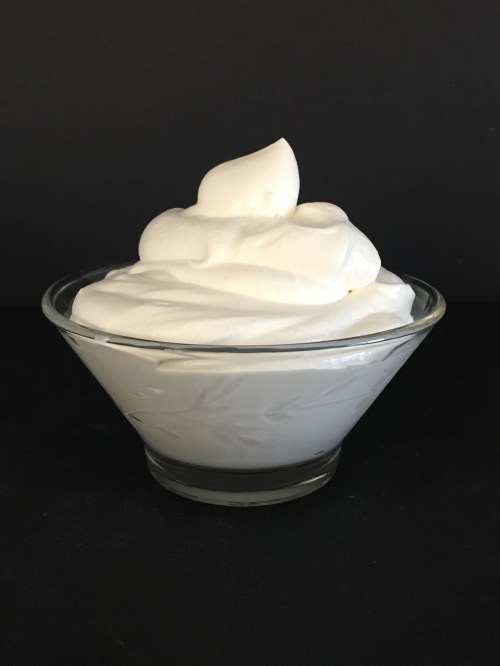
A glass bowl filled with maple vanilla whipped cream

My girls are growing up fast. So fast {sigh}.

In no time at all they’ll be leaving secondary school {high school} and heading to university.

Where they will go to college is anyone’s guess. Being Irish and American, and practically having been born with a suitcase in their hand, they think globally. Ireland…America…the U.K….or even farther afield..are all options.

And, so, with mixed emotions, I am opening my heart, mind, and our hall door to allow them the freedom to chose what feels best for them. Yes, like generations of Irish mothers before me, I am steeling myself for the eventual immigration of my children.

“But why now?”, I hear you ask. The answer is sweet and simple. Not too long ago, while I was making dinner, my eldest daughter walked into our kitchen and said, “Mom, I’ve got to learn how to cook.”

Even today, as I write this blog post, I can see her, plain as day, standing in our kitchen, hands folded across her chest, earnestly running through the list of things she needs to learn to do before she graduates next year. “And, I need to learn how to clean, do laundry, shop, and drive too! Maybe I won’t be ready for college!!”, she said.

In that moment, I realised, she’s a planner…a worrier…and already thinking about leaving.

With regard to food, she was very specific: “I only want to make easy things…not microwaveable ones…I’ll only eat microwaved food sometimes!”. And then just to be sure I was listening, she repeated, “I just want easy food mom”.

So, in the coming year, starting with today, I will be posting recipes that even a sixth-year student {senior in high school} can make while living under our roof, studying for exams, applying to university, making us crazy, and waiting for their lives to begin.

6589B4F3-7206-4975-878D-52FE33461140

First up…Maple Vanilla Whipped Cream. It’s a Cooking 101 recipe. For those of us with more than basic cooking skills, it seems a bit ridiculous to write a blog post about whipping cream. And yet, there is science and creativity to making whipped cream {as anyone who has accidentally turned their cream into butter can attest to}.

And, yes, I know it’s a crime to add anything to Irish whipping cream. Unlike cream in my native country, Irish cream is gorgeous. It has real flavour and needs no embellishment whatsoever. But, since my girls may not end up in Ireland one day {and because, on occasion, we all like to try something new} I’m starting my College Bound Girls blog posts with this incredibly delicious recipe. If you’ve got university bound kids, please share your recipes with us.

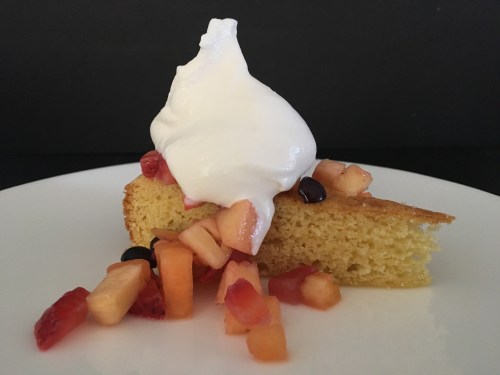
And, finally, a side note: the Victoria Sponge pictured above was made by my youngest daughter last week. The recipe will be posted soon!

Maple Vanilla Freshly Whipped Cream

Makes about 2 pints/4 cups

Ingredients

1 pint/2 cups cream

1 tablespoon maple syrup (optional)

1 teaspoon vanilla (optional)

Directions

1. Pour cream into a large mixing bowl.

2. Add maple syrup and vanilla and beat until soft, billowy, peaks form. You may use a balloon whisk, an electric hand mixer, or a stand mixer…whichever you prefer.

3. To test: lift the whisk out of the bowl and turn upside down. If the cream peak holds its shape and falls slightly to one side, you’re done.

Additional Notes, Related Articles & Credits:

* A ballon whisk is very easy to use…and I think the most satisfying. I used a balloon whisk for years, until my sister-in-law, Rosaleen, bought me an electric hand mixer for Christmas. Now I alternate, depending on how much time I have.

**If you use an electric mixer, beat the cream on medium speed, being careful not to over beat. You will recognise over beaten whipped cream instantly by its grainy  texture. To rescue, add a few extra tablespoons of cream from the carton and, using a hand whisk, gently mix it together.

***If you’re out to really have fun, continue beating your cream until it becomes butter!

****You can make whipped cream ahead of time and refrigerate it, covered, for up to four hours before serving.

***** In this video, one Irish dad gets very creative while helping his wife in the kitchen make cream. And, yes, that’s a drill he’s using!

******And, finally, here’s a video of life hacks one of my daughters downloaded to my phone. Just one more example of how they are preparing for adulthood. Be warned this video is addictive.


Read Full Post »

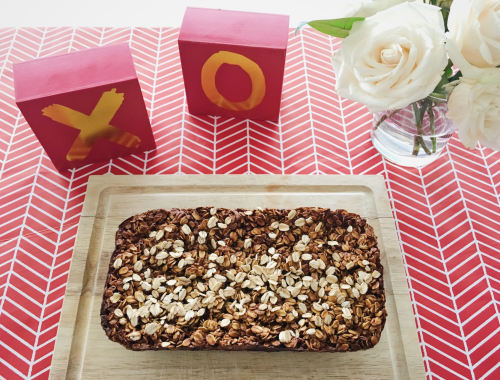
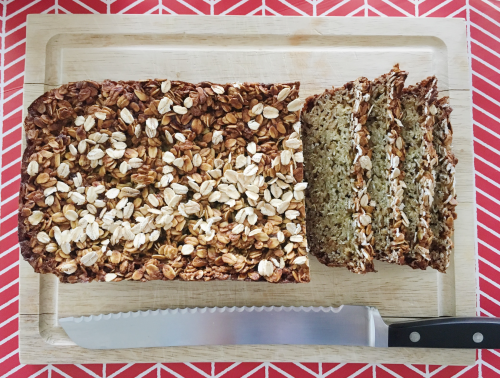
A loaf of Irish porridge bread on a wooden cutting board.February is not Irish heart month {September is*}, but with the visual cue of hearts literally everywhere we go, it seems the perfect month to reassess how best to care for the hearts of my sweet family.

Up first…exercising more. The Irish Heart Foundation recommends thirty minutes of moderate-intensity aerobic activity fives times a week. In our Irish home even that miniscule amount of exercise can be hard to achieve, which is why I’ve started making physical activity a part of our family “talk-time”. Whether it’s my husband and me, one of us with one of our daughters, or the whole family together, we’re walking, biking, hiking and even dancing to the Wii while we are talking…laughing…and sometimes arguing and crying.  The upside of combining talking and exercise is obvious…we’re hardly aware that we’re being physical.

Next…stressing less. As my husband and I have moved into parenting teens, our lives have become more stress filled. What’s worse, as our kids have moved into their teen years…their lives have become more stressful too. Multiple studies have shown that extreme emotional distress is bad for the heart, no matter what your age. Stress triggers the “flight or flight” response, which in turn causes a surge of adrenaline in the body and makes your heart pump faster and harder. Not good…unless of course you’re running away from a man-eating tiger! To counteract stress we’re all doing some simple heart healthy activities, including sharing worries and woes with friends, journaling, listening to music, and allowing time to do absolutely nothing.

Finally…eating better. Over the past ten years, we’ve steadily reduced our intake of trans fats, saturated fats, sugar, salt and alcohol and increased our uptake of water, fruits, vegetables, healthy oils, and whole grains. Some of our perennial favourites include water with mint, 70% dark chocolate (Aine Irish hand made chocolate is the bomb), omega rich salmon, roasted broccoli, and porridge.

Porridge, also known as oatmeal, is not just for breakfast any more. Last September my friend Marguerite invited me over for an afternoon cuppa and a catch up at her beautiful home in Donnybrook. Instead of the usual side of biscuits {cookies}, Marguerite served Irish Porridge Bread. I’d never had porridge bread before and was delighted to give it a try. Truth be told, it was really good.

Screen Shot 2017-02-08 at 11.00.59 AM.png

Oats are high in beta-glucans**, a soluble fibre, which can lower cholesterol by soaking it up before it gets absorbed into the bloodstream. Oats are also a rich source of magnesium, which is important in preventing heart attacks and strokes by relaxing blood vessels and regulating blood pressure. What’s more, for someone like my brother-in-law who lives with coeliac disease, porridge is, for the most part, considered a safe, gluten free, food***.

From our Irish home to yours, we wish you a happy heart month. What are you doing in February to take care of your heart?

Irish Porridge Bread

Makes One Large Loaf

Ingredients:

500ml/16oz/2cups natural yogurt

1 beaten egg

1 tbsp. treacle or maple syrup

300g/11oz/3cups porridge oats, plus 2 tbsp. more for topping

2 tsp. bread soda/baking soda

1/2 tsp. Salt

Method:

1 Place yogurt, beaten egg and treacle/maple syrup in a mixing bowl and stir well.

2. Mix the oats, bread soda, and salt in a separate bowl, add to the yogurt mixture and stir well.

3. Place in a greased or parchment lined 2lb. loaf tin, sprinkle with extra oats and bake at 180°C/350°F for 30 minutes.

4. Lower the oven temperature to 150°C/300°F and cook for another 30 minutes.

5. Lift bread out of loaf tin and allow to cool on a wire rack.

Additional Notes, Related Articles & Credits:

* Irish heart month coincides with the World Heart Federation’s World Heart Day, which is held in September.

** Journal of Nutrition and Metabolism

*** Anyone suffering with coeliac disease should proceed with caution when eating oats. Research suggests that for many coeliacs, oats are fine but for individuals who are particularly sensitive, they may be toxic.

**** For more research on the health benefits of eating porridge please see these articles (1, 2, and 3) from Harvard Medical School.


Read Full Post »

screen-shot-2016-10-08-at-4-36-22-pm

When life gives you lemons…you make lemonade, right? But what about when life gives you elderberries?

Such was my thought a few weeks ago, as I stood staring up at the enormous elderberry shrub in our back garden. In the summertime I make a delicious elderflower cordial from the tiny fragrant flowers our elder gives us: from the cordial we enjoy homemade spritzers, sweet curd, popsicles…even pavlovas…for months on end. But as I eyed the tiny black berries that had grown from the unused summer blossoms, I wondered what to do.

Irish chefs and scratch cooks have been using elderberries for many years to make wine, jam, chutneys, tinctures, sauces, tarts, and fizzy drinks. One of Ireland’s most famous chefs, Richard Corrigan, uses them to make Elderberry Jelly. Imen McDonnell, blogger and cookbook author, throws a handful of elderberries into her autumn-inspired Irish Hedgerow Martini. And Michelan-star chef J.P. McMahon uses elderberries to make vinegar and sauces for his wild game dishes.

But what could I do?

As I stood there thinking about the possibilities, I remembered that my good friend Susan once suggested our family take a daily spoonful of elderberry syrup to boost our immune systems. Susan was giving Sambucol, a black elderberry extract, to her family and was finding that they were coming down with fewer colds and healing faster when they did catch something. So, a bottle of Sambucol was bought for our home and we took a spoonful every morning from autumn to spring as an ounce of prevention for a number of years.

I don’t know when we stopped taking Sambucol or why. Perhaps I got lazy…maybe just forgetful? Last winter, however, when I was knocked for six with a cough that lasted weeks, it sure would have been helpful {not to mention “healthful”} to have some on hand.

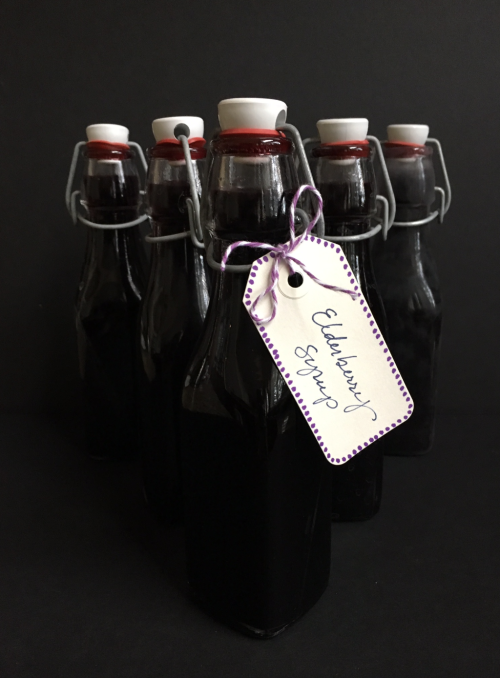
Beautiful elderberry syrup in five glass bottles

As I stood there looking up at the clusters of tiny black berries hanging heavy on our elder shrub, that’s when it struck me. I could make my own elderberry syrup with very little effort and use it as a winter tonic for our Irish family.

Recipes for homemade elderberry syrup are readily found on Pinterest. Darina Allen has one in her Forgotten Skills of Cooking cookbook. Biddy White Lennon and Evan Doyle have a whole chapter dedicated to elderberries in their Wild Food book, too. Being my first time to make elderberry syrup, I followed Darina’s recipe and, within a few hours of picking the berries in my back garden, I had my very own seasonal elderberry syrup bottled and ready to be used.

From our Irish home to yours, I wish you good cooking and very good health!

Elderberry Syrup

Makes about 600ml

Ingredients

1 lb. elderberries

1 lb./450g sugar to every 600ml (1 pint) of juice

1 organic lemon

Directions

1. Strip the fruit from the stems, put into a stainless steel saucepan, and cover with cold water.

2. Using a swivel-top peeler, remove thin strips of zest from the lemon and add {to the saucepan}.

3. Bring to the boil and simmer for 20-30 minutes or until the elderberries are soft.

4. Strain through a jelly bag or a piece of muslin.

5. Measure the juice and put it back in the saucepan. Add 450g/1 lb. sugar for each 600ml of juice and the juice of the lemon {previously zested}.

6. Bring back to the boil for about 10 minutes, allow to cool before pouring into sterilised bottles. Seal with a screw cap and store in a cool, dry place.

Additional Notes, Related Articles & Credits:

* Scientifically there is evidence to suggest that elderberries may reduce swelling in mucous membranes, help relieve nasal congestion, lower cholesterol, improve vision and improve heart health. Elderberries contain Vitamins A, B and C with large quantities of vitamin C, dietary fiber, carotenoids, flavonoids including quercetin and anthocyanins, organic pigments, tannins, amino acids, viburnic acids, minerals like potassium among others. All these make elderberry a powerful antioxidant. In addition to anti-oxidation properties, elderberries have anti-bacterial, anti-inflammatory and anti-viral properties. They also have mild diuretic, laxative and diaphoretic properties. For more information, read studies from University of Maryland, U.S. National Library of Medicine, Department of Virology, Hebrew University-Hadassah Medical School, Jerusalem, Israel, and one from Yale University.

** The elder is native to Ireland. In Irish folklore, the Elder is thought of as an unlucky plant; often connected with the fairy folk and their mischievous tricks. It was once said that to make a child’s cradle from the wood of the elder was to invite the fairies to steal away a child. According to an old Irish saying there are three signs of a cursed place: the elder, the nettle and the lonesome calling corncrake.

***Read J.P. McMahon’s article on elderberry in the Irish Times here.

****Some fun recipes for elderberries from around the web are Elderberry Ice Cream over at Hunter Angler Gardener Cook, Elderberry/Blackberry/Crab Apple Jam over at The Irish Catholic, Mulled Elderberry Gin over at Wild Irish Foragers, Elderberry Tea at Fresh Bites Daily blog, and the most beautiful Gluten-free Elderberry, Pear, Hazelnut Cake at Our Food Stories.

***** Some elderberries are poisonous and the leaves of all elderberries, especially, should never be eaten. For more information, Cornell University’s Department of Horticulture has guidelines, noting the fruits are used in “…pies, jellies and jams.” If you’re unsure if your elderberries are edible, please consult your local plant professionals/experts before consuming.

And two more articles on the benefits of elderberries may be found at the Irish Examiner and The Irish Times.

Read Full Post »


Brown and white Irish button mushrooms on a tea towel.

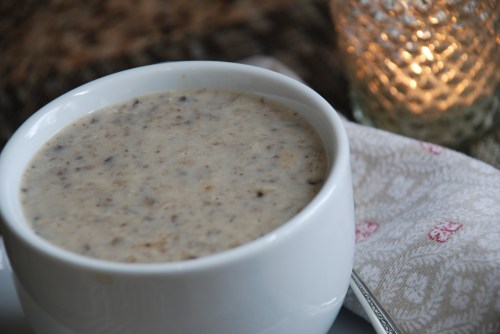
Myrtle Allen's mushroom soup in a white bowl.

The lazy days of summer are well and truly over and everyone in our Irish home is moving back into life lived at warp speed.

The kids are busy with school, sports practices/games, clubs, and homework. Our eldest daughter recently added an after school job to her schedule, which brings great opportunities for personal growth and some very welcome pocket money! My husband is traveling a lot again. And, as for me, I’m holding the whole show together.

On those days when I need a meal that’s quick and easy to make, I am thankful to have Irish Mushroom Soup as one of my go-to recipes. This particular recipe, from Myrtle Allen of Ballymaloe House, is delicious and wholesome and takes all of about 20 minutes to make. What’s more, I don’t feel the need to make anything else to call this supper: a loaf of bread and lashings of good Irish butter make it totally complete.

I’ve adjusted Myrtle’s recipe ever so slightly, God forgive me! I use a yellow onion rather than a load of spring onions and I don’t make a roux (I just pop everything into the soup pot and give it a good, stiff, stir). This soup is absolutely no fuss but it tastes like you’ve slaved over a hot hob (stove) all day.

Enjoy!

Myrtle’s Mushroom Soup

Serves 4

Ingredients

4oz/1 cup onions, finely chopped

2 oz/4 tablespoons butter

8oz/2 ½ cups mushrooms, finely chopped, (I use a variety of mushrooms)

salt and pepper

2 tablespoons plain flour

8oz/1 cup milk

80z/1 cup chicken stock

Directions

1. Sweat the onions in the butter until soft (5 minutes approximately).

2. Stir in the mushrooms and seasoning and cook for 1 minute.

3. Add the flour and cook for 2 more minutes, stirring well.

4. Remove from the heat. Blend in the milk and stock. Return to the cooker and bring the mixture to the boil, stirring all the time.

5. Adjust the seasoning (my two cents here: using a hand-held blender, blend until you have a consistency you like) and serve.

Additional Notes, Related Articles & Credits:

* If you have a few minutes, watch this interesting interview over at the Irish Food Channel with Myrtle Allen regarding Irish food production and why Irish food is so delicious.

** Read the Wall Street Journal’s article on how Myrtle Allen helped transform “fine Irish cuisine” into a bona fide culinary movement.

*** Here are some fab mushroom hunts in Ireland: Mushroom hunt with Bill O’Dea at Killruddery House and the Annual Mushroom Hunt & Lunch at Longueville House, Cork.

**** The Northern Ireland Fungus Group has lots of advice on which mushrooms can be eaten and organises annual fungal forays. See http://www.nifg.org.uk for details.

***** For other delicious soup recipes, check-out my Autumn Vegetable Soup, Leak and Potato Soup, Pea & Mint Soup, and, last but not least, my Good Old Fashioned Chicken Soup.


Read Full Post »

Irish lasagna in a baking dish with a green side salad

I’m sure every family has its own version of this classic Italian dish…but I promise you, you’ll want to give this recipe a try sometime.

In our Irish home, we table-tested many lasagna recipes over the years before realising we are truly, deeply, and madly in love with this Irish version dreamed up by my sister-in-law Ann. Thanks Ann!

What makes this recipe the clear winner for us is the absolute deliciousness of the dish. It’s comforting, without being too heavy, and it has lots of flavour. When paired with a side salad and a slice (or two) of homemade garlic bread, everyone leaves the table happy and satisfied. What’s more, my girls and sweet husband will take a slice in their lunch the next day. Don’t you just love it when a supper can become an easy-to-make lunch too?

Another reason Ann’s Weeknight Lasagna is a favourite in our home…it’s just so easy to make. Unlike traditional lasagna, there’s no béchamel sauce (also known as “white sauce” in Ireland) in this recipe. Instead, whole milk ricotta is added directly to the meat sauce, saving time but not scrimping on flavour. And, this recipe calls for precooked noodles, so there’s no hassle and time commitment there either. This recipe is just a win-win-win all around.

Ann’s Weeknight Lasagna can be assembled up to a day in advance and baked right before dinner (great for exam week or anytime everyone is helter skelter). It is great as a family meal, but it is also impressive enough to serve guests. Add a bottle (or two!) of vino, light some pillar candles, turn on some Italian music, and you’ve got the makings of a fun dinner party. And, you know I hate to be a Delia-Downer but I am ever-practical, if you’re looking for a meal to deliver to someone-in-need, this is the perfect, delicious, easy-to-make dish.

Oh, this weeknight lasagna, Irish-style, is good for so many reasons. It may not be your mum’s recipe, but all I can say is “try it…you’re gonna like it!”

Weeknight Lasagna à la Ann

Serves 8

Ingredients

1 tablespoon olive oil

1 onion, diced

450g/1 pound lean minced beef (hamburger meat)

1 pinch of dried basil, oregano and rosemary

2 x 680gram/48 ounces spaghetti sauce

8 oz whole milk ricotta

227g/80z chopped mushrooms

box of oven ready lasagne pasta

16oz shredded mozzarella cheese

Directions

1. Preheat oven to 180°C/350°F degrees.

2. Heat the olive oil in a large frying pan over moderate heat. Add the onion and sauté until translucent.

3. Add mince, being sure to break it up into small pieces. Add oregano and rosemary to taste. When the mince is cooked thoroughly, drain off any excess fat, then add the spaghetti sauce, mushrooms and the whole milk ricotta. Mix well and remove from heat.

4. Into a 9 x 13 x2 inch-baking dish, spoon a thin layer of mince sauce. Top with a layer of lasagne noodles, do not let the noodles touch each other or the sides of the baking dish. Next add a layer of shredded mozzarella. Then top with lasagna noodles, and another layer of sauce. Repeat layers as before, until your top layer of sauce is just about even with your baking dish. Sprinkle with the last of the shredded mozzarella.

5. Cover dish with aluminum (tin foil) and bake in the oven for 30 minutes until bubbling and golden brown. (Alternatively, refrigerate until ready to use).

6. Remove the foil and bake for another 10 to 15 minutes or until hot and bubbly.

7. Remove from the oven, top with some finely grated Parmesan, if desired. Let sit for five minutes before cutting.


Read Full Post »

Irish Cup of Tea

The Irish love their tea. Hot tea, I should add…because in Ireland, even on the warmest day, tea is never served cold.

And, in an Irish home, tea is typically drunk throughout the day: with breakfast, at elevenses (a morning snack, typically served around 11am), at 3pm, after dinner and, of course, any time a friend calls in (stops by).*

If you are invited to an Irish home, you can expect to be offered a cup of tea within a few minutes of crossing the threshold. But there’s a catch…you, the guest, are not allowed to accept…at least not on the first ask.

Confused? Don’t worry…it’s an Irish thing! And, having learned the hard way, I’m happy to offer some friendly advice.

So…here’s the skinny: if you are offered a cup of tea while in someone’s home…it is polite (dare I say “expected”) that you say “no” with the first ask.  Even if you’re dying for a cup of tea…just say “No thanks.” and wait.

I say “wait”  because in an Irish home you will be asked a second time. And, funny enough, “no” is what you should say the second time you are asked. Strange? I know, but it is not polite to say “yes”…yet.

It is only after the third ask, and there usually is a third ask, that you may finally say, “I’d love one thanks.” or “That sounds great.” Then your host/hostess will put on the kettle and you’ll be on to another round of questions about milk, no milk, strong or weak, biscuit or no biscuit. The Irish and their tea…it’s serious business!

The absolute exception to the above happens only in situations where you and your host/hostess are on very friendly terms. This being the case, you may on first ask be completely honest and say “yes” straight away.

Conversely, it is important to remember that when an Irish person comes to your home, they will expect you to offer them a cup of tea…three times! You should anticipate that your guest will say “no” the first time you offer and the second time too.  But the third time, you may finally hear a “yes”, in which case you are off and running. Hmmm…now you need to know that there are many different ways to serve tea in Ireland. But, before I get too far ahead of myself, let me wrap the above up by adding that if your guest says “no” the third time you offer tea, you can drop the matter altogether and know you’ve done your part to be polite.

So now…here’s a quick guide to serving and making the perfect cup of tea in Ireland.

Serving Tea in Ireland

There are many ways to serve tea in Ireland and though it is up to you to decide for yourself what you like best, you must also take into account the preferences of your guests. The things you will need to consider include: tea cups or mugs, jug of milk or tetra pack, pre-warming the tea pot and cups or not. Much of this depends on how well you know the person you are having tea with. For example, a tetra pack of milk on the table is an absolute disgrace, unless you are the best of friends or you are serving a workman doing a job in your home. Did you just do a double take on the last bit of that previous sentence? If so, you read it right. In an Irish home it is not uncommon to offer your painter, electrician or gardener a cup of tea while they are working away. And they may sit at your table and even ask you for a biscuit (a cookie)!

Some guests like the first draw of tea, especially in the evening, while others prefer their tea strong enough to trot a mouse on (meaning it is really black and strong). Some people pour milk into their cup before they add the tea, while others do the reverse, and some take no milk at all. Still others prefer a squeeze of lemon, some sugar, or both. These are questions you should ask your guest as your are serving them. And, while this all sounds like a lot of trouble, it actually happens so fast and naturally that after the first few times you don’t even think about it any more.

And finally, some Irish people really prefer to take their tea in a china cup with a saucer while others prefer a mug. Generally, here is how I do things in my Irish home: guests I want to impress get a china cup and saucer; guest with whom I am very friendly get a big, comfortable, mug (so do my children); my husband gets a china mug; and workmen who come to our home get my special “workman” mugs (yes, I have mugs especially for the men who come to fix things in our home!).

Making Tea

To make the perfect cup of tea, I take my lead from the Master Tea Blenders at Bewley’s Tea.

  • Boil some fresh water then use a little to warm the teapot and also your cup. After a minute or so, strain the water off into the sink.
  • Pop your teabags into the teapot – how many is up to you but one per cup is recommended. (I usually add two tea bags to my 4-6 cup pot)
  • Add freshly boiled water straight away, then let the leaves infuse for 3-5 minutes.
  • Remove the teabag, give the tea a quick stir, offer the first draw to whoever takes their tea light, add some milk, sit back, sip and enjoy!

Additional Notes, Related Articles & Credits:

* Statistically speaking, Irish people are the second biggest consumer of tea per person. Turkey comes first and Great Britain is behind us in third. To see more visit theatlantic.com.

Teaology with Denis Daly, Master Blender at Barry’s Tea at http://youtu.be/H79Rhn7LGY8

An excellent radio documentary on tea in Ireland on Newstalk 106 at http://www.newstalk.ie/player/podcasts/Documentary_on_Newstalk/Newstalk_Documentaries/58458/0/documentary_on_newstalk_tea_please/cp_10

More about the history of tea in Ireland at http://www.netplaces.com/irish-history/family-and-food/a-cup-of-irish-tea.htm

Irish Tea and Biscuits at http://www.irelandfavorites.com/irish-tea-biscuits/.html

The worst mistakes Irish people make when brewing a cup of tea at http://www.dailyedge.ie/barrys-tea-master-tea-brewer-tips-1480207-May2014/

My favourite teapots are sold at Avoca Handweavers, see them here.

Information about hospitality and the Brehon Laws is here

And, lastly, another Father Ted video showing the strong and very funny culture of tea in Ireland:

Read Full Post »


Screen Shot 2016-03-28 at 11.27.28 PM

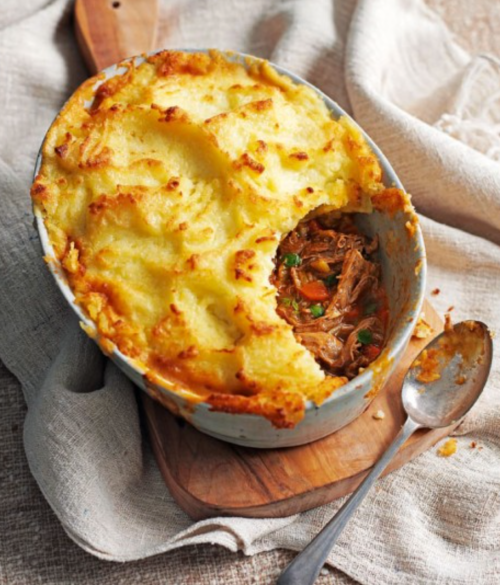
Photo Credit: Deliciousmagazine.co.uk

We feasted gloriously on Easter Sunday but, when the last dish was dried and the bits and bobs were put away, I realised we had enough leftover roast leg of spring lamb to make a second meal out of. Which got me to thinking…what to do…what to do?

Lamb Biryani sounded good…so too did Lamb Ragu…but it was good old-fashioned Lamb Shepherd’s Pie that eventually won me over.

Donal Skehan’s Hand Me Down Shepherd’s Pie recipe, posted over at Deliciousmagazine.co.uk, looked so simple and so delicious that I knew in an instant it was the best way to make “no waste” of our Easter Sunday feast.

If you take a quick look at the long list of ingredients, don’t be put off…it’s very likely you already have everything in your presses (cupboards) and fridge. In fact, I had frozen leftover mash potatoes in my freezer (!), so I was able to skip that step in the recipe below.

My family really enjoyed this dish. I’m going to take a guess that you and your family will too.

Enjoy!

Hand Me Down Lamb Shepherd’s Pie

Serves 6

Ingredients

1 tablespoon olive oil

1 large onion, finely chopped

2 carrots, chopped (I added one more)

2 celery sticks, finely chopped (I added one more)

3 garlic cloves, finely chopped

1 tablespoon fresh thyme leaves

75ml red wine

500g leftover slow-roast lamb, shredded (I diced mine)

100ml lamb or chicken stock

2 tablespoons Worcestershire sauce

3 tablespoons tomato ketchup

1 tablespoon tomato purée (paste)

800g floury potatoes, cubed

3 tablespoons butter

2 large free-range egg yolks

25g grated parmesan, plus extra for sprinkling

Directions

1. Heat the oven to 200°C/fan180°C/gas 6.

2. Heat the olive oil in a large frying pan, then gently cook the onion, carrots, celery and garlic for 10-12 minutes until tender.

3. Add the thyme and red wine, then simmer for 2-3 minutes.

4. Add the leftover lamb, stock, Worcestershire sauce, ketchup and tomato purée, then season. Simmer gently for 15 minutes until the mixture has reduced. (I added the leftover peas from Easter Sunday dinner here)

5. Put the potatoes in a large pan of cold salted water, bring to the boil, then simmer for 12 minutes or until tender when pierced with a fork.

6. Drain, return the potatoes to the pan and mash until smooth. Beat in the butter and egg yolks, then stir through the grated parmesan.

7. Spread the lamb mixture in a 1.5 litre ovenproof dish and top with the mash. Sprinkle over a little extra parmesan and bake in the oven for 20-25 minutes until golden on top and bubbling.

Additional Notes, Related Articles & Credits:

* Though the photo shows it, the recipe does not call for peas. I added them anyway and they really brightened the dish up beautifully.

** How to freeze leftover mashed potatoes, from thekitchen.com.

*** Roast Leg of Lamb Recipe from inanirishhome.com.

**** Here’s my traditional Shepherd’s Pie Recipe.


Read Full Post »


DSC_0769

Easter is a big deal in Ireland…not like St. Patrick’s Day or Christmas…but special all the same. As you would expect, there are many religious customs associated with the holiday but, did you know, there are also a good few customs that are uniquely Irish? Waking at dawn to watch the sunrise on Easter morning, cake dances, clúdóg, mock herring funerals, and evening bonfires are amongst the truly old Irish Easter traditions.

In our Irish home, because we are a family that is both Irish and American, we borrow from the customs of our two home countries when celebrating Easter. This is how we make it work for us:

* Everyone will get a large chocolate egg, filled with smaller wrapped chocolates {as is done in Ireland}.

* The chocolate egg and a dozen hard-boiled, colourfully dyed, eggs will be hidden in the garden {assuming the weather cooperates} or in the house {if it doesn’t} by the Easter Bunny {as is done in America} and a family egg hunt will take place before we go the church.

* A basket, beribboned and filled with colourful tissue paper, will be left at the end of each person’s bed by the Easter Bunny {as is done in America}.

* All of us will get a new Easter outfit {as is done in both countries}.

* And, finally, after mass we will host or be a guest at a festive meal, where lamb or ham…or maybe both…will be the main course {as is done in both countries, for the most part..but most certainly in Ireland!}.

Lamb, in particular Irish Spring Lamb, is synonymous with Easter in Ireland. It is highly prized for its delicate flavour. I am convinced, based on the wee little guys we see frolicking in the fields near our home, that it is a diet of wild clover, grass and herbs that make it truly special. Unfortunately, Irish Spring Lamb expensive, But, if you’re only enjoying it every now and again, it’s well worth the splurge.

DSC_0767

The recipe I’m sharing with you today comes from the book Cooking at Home by Julia Child and Jacques Pepin. It is incredibly easy to prepare and the meat requires almost no attention once in the oven. In our Irish home we serve roast lamb with either a homemade mint sauce or a simple gravy made from the pan juices of the roast and roasted spuds and peas for side dishes. For dessert, a lovely light pavlova with fresh fruit and lots of cream, is perfect after such a big meal.

From everyone in our Irish home to you and yours, we wish you a very happy Easter!

Jacques’s Roast Leg of Lamb

Serves 8-10

Ingredients

1 whole untrimmed leg of lamb, weighing about 6 pounds with shank and pelvic bone (trimmed of pelvic bone and most fat, about 4 3/4 pounds).

4 garlic cloves, peeled

salt

2 tablespoons fresh rosemary leaves, stripped off the stem

freshly ground black pepper

1 1/2 cups lamb stock, chicken stock, or white wine or a mixture of wine and stock

Directions

1.Prepare the lamb leg, removing the hipbone, trimming all fat, and scraping the shank bone.

2. For the herb seasoning, chop the garlic cloves coarsely. Pour a teaspoon of salt on top of the garlic and mash to a paste with the flat of the knife, then chop together with the rosemary leaves until they are finely minced

3. Thrust the tip of a sharp, thin-bladed knife into the thick top of the leg, about 1″ deep. Push about a 1/2 teaspoon of the seasoning paste into the slit with your finger. Make a dozen or more such incisions in the meaty parts of the leg, both top and underside, and fill with the seasoning. Rub any remaining paste over the boneless sirloin end of the leg. The leg may be roasted at this point or refrigerated for several hours or overnight, to allow the seasoning to permit the meat.

4. Prepheat the oven to 400ºF, arrange a rack in lower third of oven.

5. Just before roasting, sprinkle 3/4 teaspoon salt and 1/2 teaspoon of freshly ground black pepper over both sides of the leg. Set it on the roasting pan topside up.

6. Rost the leg for about 30 minutes, then turn the roast over, grasping it by the shank bone (with a thick towel or pot holder to protect your hands). Continue roasting for another 30 minutes or so (one to one-and-one-quarter hours total), depending on the size of the leg – until the internal temperature of the meat is about 125º to 130ºF when measured at the thickest part.

7. Remove the leg to a carving board or platter and rest – topside up – for about 20 minutes, allowing the meat to relax and reabsorb the natural juices.

8. Meanwhile, deglaze the roasting pan to make a simple sauce. Tilt the pan and pour off as much of the fat as possible. Place it over medium heat, pour in the stock and/or wine, and bring to a simmer, stirring and scraping up the browned glaze in the bottom of the pan. Strain the sauce into a bowl and add any juices released by the resting meat.

Additional Notes, Related Articles & Credits:

For more about Irish sheep and three recipes for cooking Irish lamb, see the New York Times Article: Erin Go Baa.

Is the Easter Bunny a Thing in Ireland? Check out the answer here at office mum.ie.

Random Irish Easter Traditions and the whole religious kit-and-caboodle may be read here at Claddaghdesign.com

More on Irish cake dances from Overland Monthly 1907 edition.


Read Full Post »

« Newer Posts - Older Posts »