Feeds:
Posts
Comments

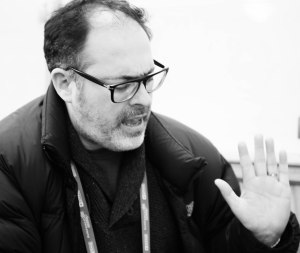
It’s been two weeks since Irish filmmaker Nick Ryan won the Sundance Film Festival Editing Award for a World Cinema Documentary for The Summit. The night before the award was announced, Nick spoke with me and photographer Michael Coles at length about the making of the film and the shocking tragedy that left eleven of twenty-four climbers dead or missing on K2 in August 2008.

You haven’t been asked much about your personal life but given I have many readers who live in or are from Ireland, I know they’ll be curious to know a bit about you. Where did you grow up? Many places in Dublin: I’d say Cornellscourt, Cabinteely, for most of my life. I also lived in Delgany, when I was a kid.

© 2013 Michael Coles

© 2013 Michael Coles

What about Secondary School and University…where did you go? I went to Blackrock College and then I went to Dun Laoghaire Art College, now Dun Laoghaire Institute of Art, Design & Technology. I studied graphic design there.

You went from graphic design to film? What happened there? Simply…I always made films but it didn’t seem, at the time, when I went to art college, a particularly good route to follow career-wise. There weren’t many real jobs back then for film makers in Ireland so I figured I’d go to art college and learn a trade.  Graphic design was something I was always interested in and that was the career path I thought I’d take but I never really practiced graphic design. After college I went directly into computer graphic animation, then through to visual effects, commercials, music videos, and then short films.

This next question may not seem relevant but it will be later on. Are you married and have you a family? Yes, I’m married and no we don’t have children.

Now, we’re done with the personal stuff, let’s talk about The Summit. This is your first big film, isn’t it? Yes. It’s my first feature. There were two short films before The SummitBlue Sky and The German. As I was finishing The German in 2008, this story (The Summit) was brought to me.

I read an article where you were referred to as a “freshman” filmmaker. How does that sit with you? Was this in a lovely Variety review, perhaps?

© 2013 Michael Coles

© 2013 Michael Coles

Yes… I take it you’re not amused! {laughter}

You have to admit, you’ve gone from doing two shorts films to making a really big film in The Summit. That’s an enormous leap, don’t you think? It’s not really. Well…I suppose it is and it isn’t. It’s an entirely different approach, without a shadow of a doubt.  I tried to employ all the narrative skills I have to tell this story.  I’ve always been a narrative story-teller and this one was just so big, hence the structure of the film and the way it is shot. It’s definitely a film for a big screen and not just a “television film”, if you know what I mean.

You worked with the writer Mark Monroe. Yes. Mark Monroe… he’s a very talented writer. He wrote a film called The Cove and also Who is Dayani Crystal which is here at Sundance. We worked very, very, hard on this film. It was such a complicated story to tell.  Basically everyone had a story on the mountain and we tried to deal with the complexities of those stories but do so in a manor…without sounding crass because it was an event where many people were killed… that would keep people engaged the whole time.

The Summit could easily have been just another “talking head” documentary. Yes, it could have been but this is really a story about adventure and human tragedy and that fascinated me. I thought it worked better as a narrative rather than a {traditional} documentary.

Some say you’ve crossed a new boundary with The Summit into something that’s never been done well before in documentary film making. Critics have described it as “dynamic”, “irresistible” and “compulsively watchable”. We knew from the beginning there was archival footage from the mountain taken by Ger and the other climbers. But there was obviously some footage that was never taken. I wanted to recreate that without being sensational about it. In all there were quite a few sources. The reconstruction we shot in the Eiger, Switzerland and then there was the aerial photography on K2. And, of course there were the interviews. Robbie Ryan, my cousin, did the cinematography for the film and it is really amazing.

Your cousin? Well, yeah, he happens to be my cousin…but he also just happens to be one of the best cinematographers in the world. He’s shot all of Andrea Arnold’s movies.

© 2013 Michael Coles

© 2013 Michael Coles

So you and Robbie are related. Is that how you got him involved? No, no, no. Robbie shot my previous film, The German. And, he was the right fit for what I was trying to do on the mountain.  Robbie’s style is very visceral and loose and he’s …you know… he’s just one of the best. It wasn’t nepotism. He didn’t “need” this gig, shall I say.

No, of course he didn’t. Emmh, no. He’s just one of the best and he also happens to be my cousin.

How did this film come to you? It started very soon after the actual events on the mountain. Pat Falvey, who was a friend of Ger’s, came to us. They had climbed together before and in 2003 they went to Everest and Pat’s life had been saved by Ger and Sherpa Pemba Gyalje.  At the time of the accident, Pemba hadn’t gotten much recognition in the media for the amazing work he’d done on the mountain and the world wasn’t aware of anything Ger had done yet. And so, at first, we were really looking into that but then by December 2008, Pemba was on the cover of National Geographic and was named Adventurer of the Year so it was a little disingenuous to suggest that he wasn’t getting the recognition he deserved for his heroic deeds.

About that time the mystery surrounding Ger McDonnell’s last movements came to light. I’d interviewed so many people and all the stories were just that little bit different…which is one of the effects altitude can put on people. It was all these divergent points of view that struck me as, “Wow! This is interesting. There’s more to this story than meets the eye.”

How many hours of film did you have to go through in order to make The Summit? Roughly about 500 hours.

You are not a climber yourself. No. I am not. I’ve seen the mountain with my own eyes and it’s impressive. It’s scary. But, I’m not a climber. I got sick after being up there. I spent one hour and twenty minutes in a Pakistani helicopter, at over 7,000 meters, without oxygen. Not that they didn’t give it to me. It was at my feet but I was holding and controlling the camera system that required two hands and I was looking at a screen, so I wasn’t able to hold something to my face and breath.

What’s it like up there? It’s absolutely incredible. You know, at that altitude you think you wouldn’t be able to breathe but it feels the same as it does right here. You don’t feel the difference or changes happening to your body.

© 2013 Michael Coles

© 2013 Michael Coles

You look out there and it is three miles down and K2 is right there beside you, it’s just amazing. When I strapped myself into the helicopter that morning, I remembering thinking “What am I doing? What am I doing?” But literally an hour later, by the time I was up there, it didn’t even concern me anymore.  I should have known something was up when I wasn’t scared in the slightest. That was truly the give-away. I was scared until I got up there and then it all went away and that was a sign that things were not right.

Were you loving it? No, I just remember being, almost, euphoric. There were so many factors going against us ever seeing the mountain…time, no money to do this… and then it was all pure luck the way it came together. The weather was in our favour. The pilots themselves said, “We’ve seen the top of K2 and we’ve seen the bottom of K2, but we’ve never seen the whole thing at one time.” When we saw the whole thing, the pilots said to me, “The gods are smiling on you!”

Yes, about those pilots…Well, I sort of got them into trouble because when we returned I said, “I can’t believe we got to 7,500 thousand meters” and the station chief, the head of the base, turned around and said, “You did what!?”

That’s a thousand meters above the actual operating ceiling of the helicopter in terms of safety. You know, those pilots were great. They knew what we were trying to do and they helped us. They were incredible. You could actually feel the helicopter straining at times.

I know people are really fascinated by that element but really this is a story about these people’s lives. It’s a tragedy. In one way I love talking about the technical aspects of making the movie but, underneath it all, it’s about them.

It’s been said that you broke a world record for flying up K2 for the making of this film. Have you contacted Guinness World Records yet? No. There were no officials up there to record what we did but I’m sure if we triangulate from the cameras we can prove we were there. We also have the Pakistani pilots to confirm it.

Although you’re not a climber, it seems you’ve employed the same intensity in the making of The Summit that a climber uses when attacking a mountain. What would your wife say? I don’t know really but one of the more interesting aspects and one of the “draws” for me…which I haven’t really discussed with anybody…is the statistics of K2. I don’t mean to sound like I’m glossing over the horrific deaths but, you know, only 1 in 4 successfully summit and make it back down K2. At first I was dismissive of why anyone would put their lives at such risk but by July 2011, some three years into this, I found myself having to go to the mountain see it for myself.
© 2013 Michael Coles

© 2013 Michael Coles

I’d spent a year getting visas to fly with the Pakistan military to 7,500 meters and basically the odds of that trip being successful was 1 in 3 so it would be pretty hypocritical of me to turn around to the climbers and say, “You know, you’re an idiot! Why are you taking such a risk?”

I had to tell my wife those statistics, actually, I don’t know if I gave her a full example, but I did have to meet her one Friday and say, “Look, here’s a card for a solicitor. You need to go and sign a will. What we’re doing is dangerous.” Primarily because everyone was telling us that going through the northern territories of Pakistan was a huge terrorism risk. In the end, it was absolutely fine.

In your opinion, what kind of person takes on the risks of a mountain like K2? When we started, I wanted to know what kind of person does this and why. As it turns out there are many reasons why they do what they do. K2 is surrounded by obsession. Wilco, the Dutch climber…this was his third attempt. Ger, this was his second. He was nearly killed in 2006. It just takes a certain kind of intense personality.

Ger McDonnell is a huge part of this film. What did you learn about him through this process? Ger wasn’t a commercial climber. He climbed for the spirituality and the love of climbing. He didn’t do it for sponsorship. He was embarrassed to tell people that he’d even climbed Everest. He wasn’t the kind of guy to go out and shout around what he’d accomplished. That’s why Ger was so central to the story. He was a little different from most of the other climbers. Some people climb for a living. You’ll see them in this film. You know, like the Sherpas and the western climbers. Some climb for a living and then go around giving motivational speeches and telling everyone about it. They are the professional adventurers. Ger was different. He wasn’t like that.

If you could give me a few words to sum up the essence of Ger, what would they be? He was a great guy, full of life. He was a real gentle man…a diplomat on the mountain. He was well liked and kind and accepting. I’d also add that I don’t believe he was hardwired to be a K2 climber. The unwritten code of the mountain is that if a climber gets in trouble or goes off course, he’s on his own.  Ger just couldn’t leave those guys on the mountain to die without trying to help them first.

© 2013 Michael Coles

© 2013 Michael Coles

What has been the high point of the Sundance Film Festival for you? The Festival has been absolutely incredible and I’m so proud to have been able to show The Summit here. Also, the audiences are astounding. We have been playing to packed audiences and people have been getting turned away at every screening.

How have you enjoyed Park City? Absolutely. It’s a great place. Very beautiful.

Nick Ryan, thank you very much. It’s been lovely to meet you and learn more about the process of making The Summit. You’re welcome.

Irish Producer/Director Nick Ryan won the Sundance Film Festival Editing Award for a World Cinema Documentary this past weekend in Park City, UT for his thrilling film The Summit.

Flying to an altitude of 23,500 feet (7,162m) on K2, a mountain more challenging and dangerous than Everest, Ryan operated a Cineflex camera system mounted to a Pakistani Army helicopter, filming aerial footage of the shoulder above Camp 4 and the Serac. His film chronicles “the deadliest day in modern mountain climbing history,” and sheds light on the still-unresolved 2008 expedition in which 11 of 25 climbers died. The story focuses on Irish climber Ger McDonnell, originally from Kilcoran, Co. Limerick, who risked his own life to save others.

The Summit will première in Ireland at the Jameson Dublin International Film Festival on Sunday, 24th February, at 2.30pm at the Savoy.

Praise for Ryan’s film includes:

“This remarkable film puts us in their shoes – literally between the world’s most ferocious rock and the icy hard place of imminent death. As such, The Summit dignifies the actions of the surviving climbers by putting their earth-bound detractors in their precipitous plight. Similarly, the technical contributions merge in ferocious splendor: Howling winds, topped off by Nick Seymour’s edgy musical score, acclimatize our senses to the deep drops and harrowing heights of The Summit.” – The Hollywood Reporter

“Remember Sylvester Stallone’s 1993 action film Cliffhanger? Well, it’s nothing like that. The Summit is a hell of a lot more intense, and it’s a way better all around film with an intriguing story.” – Geektyrant.com

“The Summit…, it’s well worth catching on the largest screen you can find. A fascinating insight into the lives and deaths of those driven to conquer the world’s most ‘perfect’ extremes…The Summit is informative and diligent film-making. it’s never less than engrossing.” – Twitchfilm.com 

“The alluring imagery, thorough research, and emotive content does ensure a gripping and distinctly human story. The result is a brutal but fascinating affair. – Thehollywoodnews.com

“The project attracted some of the most talented names in documentary filmmaking. Writer Mark Monroe (of Academy Award-winning The Cove and The Tillman Story,) and Academy Award-winning executive producer John Battesk (Searching for Sugar Man, Restrepo, The Imposter). – Siliconrepublic.com


Still from the Irish film, The Summit, directed by Nick Ryan.

Still from the Irish film, The Summit, directed by Nick Ryan.

“Curiosity will conquer fear more than bravery will”, so said Irish poet and novelist James Stephens.

Yesterday I was curious, fearful and brave nearly all in one breadth.

Here’s what happened…Around lunchtime it occurred to me that I was blessed to be in Park City, Utah attending what is, without a doubt, one of the most prestigious film events in the world. Enjoying films, educating myself and attending some parties is absolutely brilliant but I started thinking about what a waste it would be to not use this opportunity to reach out to the Irish community at Sundance. What a bigger waste not to tell you, Dear Readers, about the cinematic work the Irish brought to Sundance.

So, I wrote a blog about the “short” film called Irish Folk Furniture. I linked the story to YouTube so you could see the film and mentioned how director Tony Donoghue had won the Short Film Special Jury Award in Animation.

Next, I set my sight on the other Irish entry, The Summit, which has been nominated for the World Cinema Documentary Award at Sundance. It’s been a good year for the Irish at Sundance!

http://vimeo.com/53331644

Figuring out how to see The Summit and meet director Nick Ryan had me stumped. I tried to purchase tickets to the film weeks ago but had been unable. It was completely sold out. I even went to the Sundance Box Office on several occasions and had been told “not a chance”. Seeing the film wasn’t my only desire, however. I wanted to meet Nick Ryan. I wanted to interview him for In an Irish Home. I wanted for you to learn something about Nick and The Summit that wasn’t already printed somewhere else. That was my curiosity.

My fear is that I don’t see myself as a journalist. I see myself as a writer. Even if I could get an interview with Nick Ryan, would he see me as a joke? Would he feel I was wasting his time with my trite questions? Is my blog too small for someone who’s achieving such big success? Doubt filled me with fear.

Then something happened. I decided to let curiosity win over fear. Bravery stepped in too. I decided what I needed was to try and, if necessary, fail. After all, isn’t that what I’m trying to teach my daughters? So I went back up to Park City’s Main Street and marched into the Sundance Box Office once more. While I walked I asked God to “please let me meet a ‘real’ journalist so I could pick his or her brain and learn {quickly} how to be a good interviewer”.

Once again the Box Office told me “no dice”. So, somewhat dejected but also very determined, I did what any Irish writer might do…I headed to the nearest Irish pub. In this case it happened to be Flannigans. I marched up to the bar, ordered myself a Baileys on ice and, quite by accident, sat down next to my friend David Germain, from Associated Press! Wow…God could I also have a million dollars?

David is a dote. He listened as I shared my curiosity and my fear. He encouraged me to keep trying and then he did something utterly wonderful. He picked up his phone and sent a message to Nick Ryan’s publicist asking her for a ticket to the film for me and, better still, asked if Nick had time to meet me.

I was gobsmacked.

The next few hours flew by and before I knew it, I was offered a ticket and a meeting for Friday evening.

As any Irish story goes, this one just gets better. While at a party last night I was talking with photographer Michael Coles. And, after hearing my story, Michael asked if he could come along and photograph Nick for the article.

And so, Dear Readers, I think James Stephens was nearly right…curiosity did conquer my fear but bravery definitely helped. I am terrified to meet Nick but I’m going to do this for me and for you. I’ve got my questions ready and a world class photographer to hold my hand. Wish me luck and say a little prayer for me, won’t you?

I’ll follow up with a post on Saturday and let you how it went.

A still from Tony Donoghue's Irish Folk Furniture.

A still from Tony Donoghue’s Irish Folk Furniture.

For the last five days I’ve been fortunate to be in Park City, Utah again for the Sundance Film Festival.

It’s been a crazy week…a fabulous week…an emotional week.

As I sit here and quickly write this post, I have already seen three films. I have tickets for another four. The subject matter includes the hardship and death of an illegal emigrant (Who is Dayani Cristal), pornography (Lovelace), police brutality (Fruitvale), nuclear energy (Pandora’s Promise), the power of activism (Occupy Wall Street), the crushing reality of hate (Valentine Road) and, finally, classism (American Promise). All-in-all, it’s pretty heavy stuff.

So you can imagine my great relief and joy when I was able to sit with my laptop and watch a light-hearted Irish “short” film on YouTube called Irish Folk Furniture.   It is a charming eight-minute animated documentary following 16 pieces of traditional folk furniture as they are repaired and returned to their owners. It was made by director Tony Donoghue and producer Cathal Black after ten years of research and interviews conducted in Co. Tipperary.

Last night Tony and Cathal were rewarded for their efforts by winning the Short Film Special Jury Award in Animation. There were over 8,000 short-film submissions made to Sundance this year. 65 were chosen for the competition. 7 won.

If you have a few minutes, watch this superb little film. It is “full of life and told with beautiful simplicity.”

A belated “Happy New Year” everybody.

I’d planned to write more over the Christmas break, honestly I did.

There was so much to share with you about the traditions of an Irish Christmas (midnight mass, the morning swim at the Forty Foot, tins of USA biscuits, and the making of a Christmas pudding), St. Stephen’s Day (26 December) and Little Christmas (6 January), also known as Nollaig Bheag and Woman’s Christmas. But rather than write, I took these past few weeks to spend time with family and friends.

Instead of researching, I cooked, played card games with the kids, baked, went for long walks, snuggled down and watched movies at home and, generally, had an exhausting but  great time. Thankfully the end of the world didn’t happen on 21st December so there will be other opportunities to write about Irish Christmas traditions in the years ahead. There won’t, however, always be time to create memories with the ones we love.

Yes, I know that last line sounds cliché but it’s heartfelt.

In the last month, three women I know have lost children. They have lost the potential of what could have been…what should have been…and my heart grieves for them in their loss.

An unborn child. A murdered child. A child whose wee body couldn’t go on.

It’s all so senseless.

So, when life gives us situations we can’t begin to understand what do we do?

Simple things.

After listening, praying, offering…what’s left for those of us who are the “lucky” ones is to honour the memory of the one who has passed in whatever way we can.

My way was to gather my clan together and share in simple traditions: decorating, cooking, eating, laughing, reading, etc.

Now that Christmas, New Year and all the celebrations that go with them have passed, I notice the sun is staying higher in the sky and winter is slowly, oh so slowly, shifting towards spring. Weeks have quietly gone by in this Irish Home but I have no regrets of how we spent our holiday time together.

I hope you, Dear Reader feel the same.

And, if by chance, you do not…stop right now…and take action. Pick up the phone and say “I love you”, hug your nearest and dearest tight, dust off an old board game and gather your family around the table this evening. Say “no” to your phone, your job, your social obligations and make time for the ones you love.

Please God, and with any luck, we’ll have time to get back to all the other things we think we are missing.

Slán Abhaile (safe home).

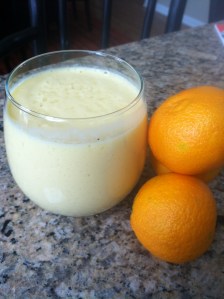
IMG_2876In an effort to keep the family healthy this year, I’m starting our busy winter days with a delicious smoothie. Seems I’m not the only one thinking this way: even the Irish Rugby Football Union has a list of smoothies it suggests to fans and athletes!

The smoothie of choice in our Irish home this week is mango pineapple.

What’s your favourite smoothie?

Mango Pineapple Smoothie

Serves 4

Ingredients

1 cup/4oz frozen or fresh pineapple

1 cup/4oz frozen or fresh mango

1 banana

1/2 cup/4oz plain Greek yogurt

1 cup/8oz orange juice

squeeze of honey

Directions

1. Place all ingredients in blender and blend until smooth.

Last weekend, in Washington, D.C., Pat Mitchell of the Paley Center for Media hosted a TEDxWomen 2012 Conference, a weekend-long event exploring the topic of “The Space Between”. The Space Between is a hard concept to grasp but in essence it boils down to this: it’s that infinite place between two opposing views where ideas are born and discussed.

feature-tedw-2012-by-paley1a

In a short period of time and in a beautiful venue (the United States Institute of Peace), 50 speakers from around the globe, both male and female, young and old, talked about the space between poverty and plenty, fact and faith, IQ and EQ, what we see and what we reflect, stops and starts, and seeing and doing.

What was wonderful about the topic of The Space Between is that it allowed for personal interpretation of values, beliefs, anger, wonderment, thanksgiving, artistry, and so much more. Because there was no clearly defined meaning, the speakers could tailor their presentations to fit their personal take on all things. And, just in case the word Women after the TEDx makes anyone think the conference was something akin to a bra burning, man hating, feminist event, rest assured it was anything but that. From war correspondents to artists, the topics ranged from helping reconnect prison fathers with their daughters to gender lens investing to Darwin reshaping the way we think about creation. To see a complete list of the conference speakers and synopsis of their talks click here.

I was fortunate to go to TEDxWomen 2012 The Space Between. For me it was an opportunity, after many years of primarily being a mom, to explore where, in the near future, I may make the most of my time, talent and treasure. It wasn’t a life changing experience but it certainly was life shifting. I hope to attend next year’s event and would encourage you to do so too.


A belated Happy Thanksgiving to you!

Recently I’d hoped to blog about the joys of celebrating Thanksgiving in Ireland but, things being what they are, it wasn’t to be. Instead of cooking and writing, I jetted off to sunny California at the last minute with the family and, as a test, I traveled with my iPad rather than my laptop.

Writing on the iPad proved difficult. I didn’t think about pre-uploading recipes or photos to a “cloud” or Dropbox and I didn’t think about the possibility of dodgy internet connections. Mind you, I haven’t given up altogether (I’m writing on the iPad  now from Washington, D.C.). The test will be when I press the “Publish” button yet again…will it work this time or not? We’ll see.

So I missed sharing my mother-in-law’s stuffing recipe with you and telling you about the homemade pumpkin pie recipe I found and tried. (Who knew it was easy to make delicious pumpkin pie without a can of Libby’s?) The upside of this lost opportunity was that our little family spent time with our larger Irish family now living in sunny California. We met the newest addition, baby Neve (sounds like “never” without the “r”), tasted new foods, saw the latest Hollywood releases and shopped the sales. The recipes will wait until Christmas…right?
At this late date all I can offer you is the following Irish blessing. It was perfect for our Thanksgiving celebration. Perhaps you’ll recite it some evening when you sit down to dine with your loved ones.

“May love and laughter light your days,

and warm your heart and home.

May good and faithful friends be yours,

wherever you may roam.

May peace and plenty bless your world

with joy that long endures.

May all life’s passing seasons

bring the best to you and yours!”

Weekday mornings are a bit of a panic in our Irish home. Book bags, shoes, hair ties, racing for the car…wait!…”Did you finish your brekkie?”. Most days there’s no time for rashers and sausages and lovely eggs. Nope. Crack of dawn, Monday to Friday, we can be a slap, dash, thanks for the hash kind of family.

Maybe we should get up earlier? You know if I tried to push that agenda forward there would be a revolt in our Irish house!

So I’ve been thinking about breakfast a lot lately. You may have noticed that I posted a smoothie recipe last week {the first of many, I hope). While smoothies are great, I feel strongly they shouldn’t be the sole breakfast food at the start of every day.

What else will the family eat in the morning when we are short on time? Cereal…ok. Pancakes…out of the question! Porridge…better. We need something quick and healthy and yummy.

Thankfully I have a huge collection of cookbooks and handwritten recipes. Old and new, from all over the world, I’ve been buying, copying and gathering them since I was a blushing bride. I have so many books that they are not only stored in the kitchen, where there’s limited space, but our sitting room as well.

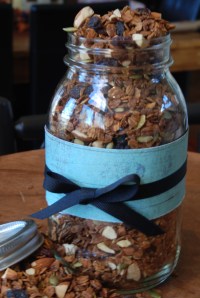
A lengthy search last week turned up what has proven to be a new winner in our house: muesli. The recipe chosen was handwritten quickly and given to us by our childminder, Nadia. Until now, I’ve never tried it.

Nadia’s muesli is easy to make. It has a slightly sweet, slightly salty flavour. The toasted rolled oats, pumpkin seeds and almonds make it oh so more-ish. And, maybe because it’s homemade, it doesn’t have any of that over-the-top sugariness. We’ve been serving it over Weetabix, Special K, yogurt and fresh fruit this week {not all at once, mind you!}.

The true test of success however has not just been in the empty breakfast bowls this week. I believe we’re on to a winner with Nadia’s muesli for two more reasons. Firstly, my oldest daughter asked me to put some in her school lunchbox for break time tomorrow. And secondly, my lovely Irish husband asked me to make a double batch when we got to the bottom of the jar this morning. I don’t know what you think, but I don’t need a fourth reason to make more of Nadia’s muesli.

I hope you try this recipe. You’re sure to love it and may even make it your own by adding a few different ingredients such as chocolate nibs, dried cherries, cystalised ginger, dried apricots or whatever catches your fancy first thing in the morning. Enjoy!

Nadia’s Muesli

Makes 5 cups/600 grams

Ingredients

1 teaspoon cinnamon

50 ml/¼ cup maple syrup

1 oz/¼ cup brown sugar

50 ml/¼ cup olive oil

½ teaspoon salt

1 teaspoon vanilla extract

340g/12 oz/3 cups rolled oats

86g/3 oz/½ cup raw almonds chopped in half (walnuts and pecans are nice too)

2 oz/¼ cup raw pumpkin seeds

1-2 oz/1/3 cup raisins

Directions

1. Preheat oven to 150°C/300°F.

2. Mix first 6 ingredients in a large bowl.

3. Add oats and mix to coat.

4. Spread mixture out on a large, rimmed, baking sheet. Bake for 25 minutes. Stir every 5 minutes.

5. Add the almonds and pumpkin seeds and bake for another 15 minutes. Continue to stir every 5 minutes.

6. Remove the hot muesli from the oven and allow to cool completely before adding raisins

7. Add raisins and store in a sealed container to keep fresh.

It’s that time of year again when cold season is right around the corner.

Before the family comes down with something awful, I’ve decided to take a proactive step and beef up our collective immune system. My tools of defense are simple: sleep, a daily multi-vitamin, exercise, and adding more fruits and vegetables to our diet.

We already eat well, so the overhaul for us is not really about lunch or supper… it’s breakfast.

This week we’re adding a healthy smoothie to our morning routine. Today we started with Martha Stewart’s Green Machine Smoothie. Packed with spinach, avocado and a granny smith apple, this tasty drink is full of vitamins and fibre. The lovely bright green colour, reminiscent of Ireland’s rolling spring landscape, is a bonus {that’s what I told the children}.

Come back next week and see what new smoothie we’ll be drinking to help us stay “fighting fit” this winter. I promise to only publish the smoothies we enjoy! Until then, stay healthy.

Martha Stewart’s Green Machine Smoothie

Serves 4

1oz/1 cup packed fresh spinach leaves

10oz/1 1/4 cups white grape juice or pear juice (apple juice works well too)

1/2 avocado

1 Granny Smith apple, peeled and cut into small pieces

1 cup ice

Directions

1. Blend spinach leaves, juice, avocado, apple, and ice.


Note: Was rereading an article published in The Irish Times on 13 September 2013 (see Related Articles below) and wanted to include it with this posting. It makes for interesting reading.