Feeds:
Posts
Comments

Posts Tagged ‘Kim McGuire Recipes’

DSC_0486Isn’t it always the case that when you talk about something not happening it frequently ends up happening?

I should have known better than to end my post on porridge with, “I wish you and your family all the good health that my little family has enjoyed these past few months.” That one line was just too tempting for the powers that be. Less than 24 hours after hitting the “Publish” button, one of the children came home with a cough…which turned into a fever… and then a sore throat…that was diagnosed as a virus… and the next four days were misery for the poor dear.

Immediately, I shifted into nurse-mom mode and initiated a host of health promoting cures: salt-water gargle, humidifier in the bedroom, increase of fluids (including warm lemon water with ginger and honey to soothe a sore throat), nasal irrigation (our G.P. thinks using a Neti-Pot is a great way to keep the nose clear and help reduce post-nasal drip which may cause a sore throat or a cough), and, my very favourite, homemade chicken soup.

Chicken soup?! What a load of hooey…or is it? The benefits of chicken soup were first reported centuries ago, but there’s never been any real proof about its efficacy, until now. University of Nebraska Medical Center physician and researcher Stephen Rennard, put the chicken soup folk remedy to the test by taking it out of the kitchen and into his laboratory. What he discovered has settled the dispute, once and for all.

In his findings, Dr. Rennard proved chicken soup has a number of substances, including an anti-inflammatory mechanism, that helps ease the symptoms of upper respiratory tract infections.

Though he was not able to identify the exact ingredient or ingredients in the soup that make it effective against fighting colds, Dr. Rennard theorizes it may be a combination of ingredients in the soup that work together to have beneficial effects.

And there you have it…no longer just a wives tale…good old fashioned chicken soup…mother approved and doctor tested. Be well!

Good Old Fashioned Chicken Soup with Orzo

Serves  6 to 8

Ingredients

1 tablespoon vegetable oil

1 whole chicken, skin left on, cut into pieces including breasts, split in two, wings, drumsticks, thighs, and back

1 large onion, cut into medium dice

4 pints/2 quarts boiling water

2 teaspoons table salt

2 bay leaves

2 cloves garlic, thinly sliced

1 1/4”/3cm ginger, sliced

2 large carrots, peeled and sliced

2 medium ribs celery, sliced

1 cup/2oz shredded green cabbage

¼ teaspoon dried thyme

½ cup/100gm orzo (may substitute noodles)

fresh parsley leaves, chopped for garnish

Ground black pepper

Directions

1. Heat oil in large soup pot. When oil shimmers and starts to smoke, add chicken and sauté until brown on all sides.

2. Remove chicken and set aside. Add half of chopped onions to pot and sauté until colored and softened slightly, about 3 to 5 minutes.

3. Add chicken pieces, except for the breasts, back to pot, reduce heat to low, cover, and simmer until chicken is fully cooked and releases its juices, about 20 minutes.

4. Increase heat to high, add boiling water along with the two breast halves, salt, ginger, garlic, and bay leaves and bring to a rapid boil. Reduce heat and simmer, covered, until chicken breasts are cooked and broth is rich and flavorful, about 20 minutes.

5. Remove chicken breasts from pot and set aside. Strain broth, discarding bones, and set aside.

6. Skim fat from broth, reserving two tablespoons which should be added back to soup pot. Return soup pot to medium-high heat. Add remaining onions, along with carrot, cabbage, and celery and sauté until softened, about 5 minutes.

7. Remove skin from cooled chicken and shred the meat into bite sized pieces. Discard skin and bones.

8. Add thyme, strained broth, chicken, and orzo to the soup pot. Simmer until vegetables are tender, about 10 to 15 minutes.

9. Taste, adjust seasoning, serve with chopped parsley, if desired.

Read Full Post »

DSC_0469 (2)For the past few months I’ve had the family on a bit of a health kick. The plan has been to focus on the usual triad: getting more sleep, taking regular exercise, and carving out time for leisure activities like reading, puzzles, board games, movies, and cooking together. Surprisingly, these simple changes have been difficult to incorporate into our lives but, ever so slowly, we are making progress. Another area I decided to focus on was the family breakfast.

Like most Irish people, we typically start our day with cereal, fruit, yogurt, or a boiled egg and toast. This past autumn, I broadened the options to include homemade muesli, a variety of smoothies, and {my favourite} steel cut oatmeal, known in Ireland as porridge.

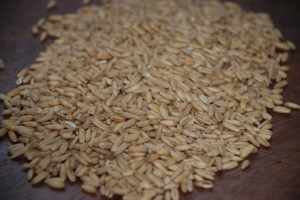
Rolled Oats on the left and Steel Cut Oats on the right.

Rolled Oats on the left and Steel Cut Oats on the right.

Until recently I never gave much thought to porridge. I knew it came as rolled, quick-cook and steel-cut/pinhead oats and that the latter is said to be the healthiest option because it is higher in fiber, both insoluble and soluble. I also knew, and I’m not meaning to go too deep here, that scientific research suggests soluble fiber, in particular, lowers cholesterol and may help lower the risk of heart disease for men and women alike. Otherwise, all I’ve known about porridge was that my late father-in-law ate it nearly every morning of his post-career life, giving it near “legendary” status in the McGuire clan…but that’s a story for another day’s telling.

I have since learned porridge is an ancient food made from oat groats. It has been grown in Ireland for thousands of years because the oat, a rain tolerant grain, grows well in our climate. It has been known as Stirabout but I’ve never heard my friends, or even my lovely mother-in-law, call it that nor have I seen it mentioned in modern cookbooks as such. Long ago, if made with water in an almost soup-like consistency, it was known as Skilly or Gruel, and would have been eaten at supper. And, one thing that seems to have remained fairly consistent throughout time is how porridge has, for the most part, been prepared: boiled with water or milk and served with a bit of cream, sugar, honey, seeds, or fruit on top.

There are oat mills still in existence in Ireland and many oatmeal brands. Perhaps the most internationally recognised one is McCann’s Steel Cut Oatmeal, but it is no longer Irish owned. My favourite is Flahavan’s Pinhead, which has been milled by the Flahavan family in Kilmacthomas, Co. Flahavan's OatmealWaterford for more than 200 years. Macroom Oatmeal is another brand. It is less well-known but has, most notably, been served at Ballymaloe House for many years and is for sale at the Ballymaloe Cookery School and on their website. It is has an almost cult-like following so, as soon as possible, I will try it and give you the scoop.

Until then, I wish you and your family all the good health that my little family has enjoyed these past few months. Let me know what you are doing to keep healthy this year. Be well!

Traditional Irish Porridge

Serves 4

Ingredients

1 cup/7oz steel cut (or pinhead) oats

4 cups/2 pints water, milk or half of each, whichever you prefer

Directions

1. The night before, bring the water to a rapid boil.

2. Slowly add the oatmeal, mixing all the time, and bring the water back to the boil.

3. Turn off heat, cover and leave to set overnight.

4. Next morning, add more water (or milk), stir and reheat.

5. Top with toasted nuts, cinnamon, brown sugar, golden syrup, honey, fruit, cream, milk or whatever you desire.

From Atlantic Monthly Magazine: http://www.theatlantic.com/health/archive/2009/06/irelands-renowned-oatmeal/19125/

A bit of history about Irish porridge at http://culinarytravels.co.uk/2010/10/22/porridge/

Some history about Flahavan’s Oat Mill at http://culinarytravels.co.uk/2010/10/22/porridge/

About Macroom Oatmeal Mill at http://www.ireland-guide.com/establishment/macroom-oatmeal-mills.10857.html

Read Full Post »

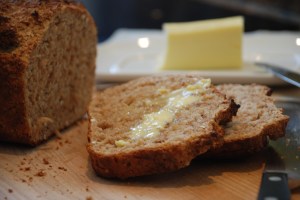
DSC_0346In our home there is almost always a loaf of scratch-made bread in the bread box.

It’s not the fancy white loaf that’s taken hours to make and been left to rise in a warm spot. No. Our bread is the rich, traditional Irish kind that can be whipped up quickly, in one bowl, and takes about an hour to bake. It’s the one that’s always served alongside those delicious wholesome vegetable-based soups found in cafes and pubs around the country and the very same one my lovely mother-in-law would give her twelve children nearly every day for tea time (dinner), before the main course.

I go back and forth baking Soda bread , Brown bread {the recipe below), and a Multiseed brown bread {promise to post soon}. Initially, I only made soda bread because that’s what my mother-in-law taught me to make. Then I added the other two breads because of the extra ingredients {oat groats, bran, and wheat germ in today’s Brown bread and oat groats, bran, wheat germ, sesame, poppy, pumpkin and sunflower seeds in the Multiseed bread} which help to make it even more healthy. Now, it’s a weekly toss up as to what’s in the bread box.

DSC_0357Whichever you try, rest assured your home will smell glorious for the effort. When you take the loaf from the oven, you and your family will want a slice while it’s still hot. And when slathered in butter, and maybe even some homemade jam, you’ll enjoy the nutty flavour, crumbly texture that is only found in traditional Irish bread. Enjoy!

Irish Brown Bread

Makes One Loaf

Ingredients

1 1/2 cups/200g/6oz self-raising flour

2 1/4 cups/300g/11oz coarse brown flour

1/3 cup/2 handfuls bran

1/4 cup/1 handful wheat germ

1/4 cup/2oz oat groats, pan toasted

2 heaped teaspoons baking powder

1 level teaspoon salt

2-3 cups/600-900ml/1-1 1/2 pints buttermilk

Directions

1. Pre-heat oven to 240°C/450°F/gas mark 9. Lightly oil a loaf tin on bottom and all sides and line with a sheet of parchment paper.

2. Mix all the dry ingredients together in a large bowl.

3. Add enough of the buttermilk to give a moist but not sloppy mixture.

4. Place in a loaf tin and bake for twenty minutes. Reduce oven temperature to 150C/300F/gas mark 2 and bake for an additional hour.

5. Ease bread from loaf tin. Carefully turn it over and tap to see if it sounds hollow. A hollow sound means the bread is fully cooked. If not, return it to the oven for another 10-15 minutes. Do not put it back into the loaf tin, just put it right-side up, directly on the shelf in the oven.

Related articles

Read Full Post »

Many of you have written in and asked, “What do the Irish eat during Lent?”.

The simple answer to that question is: “Pretty much what everyone else in the world eats during Lent.”

If you mean to ask, “What do Irish Catholics eat during Lent?”…well, that’s an entirely different question.

Catholics everywhere are meant to observe the Lenten tradition of giving something up. In Ireland most will abstain from eating sweets and puddings (dessert) or drinking alcohol. The exception, of course, is on St. Patrick’s Day when everyone gets a free pass to do as they please. I still don’t know how that came about but you know the saying “when in Rome…”. On Ash Wednesday, Good Friday and all Fridays during Lent, Catholics also observe the custom of not eating meat.

DSC_0376In our home, we typically eat fish once a week throughout the year. During Lent we eat it on Fridays. I tend to serve salmon because it’s a healthy protein, high in vitamin A and omega-3 fatty acids, which are essential for proper brain and heart function. My favourite places to buy salmon in Ireland are Caviston’s Food Emporium in Glasthule, Donnybrook Fair, and Marks & Spencer.

When it comes to recipes, Delia Smith’s roasted salmon fillet with a crusted pecorino and pesto topping is hard to beat. You may think pesto and salmon are an odd combination but the two together are just divine. As this is a dish I have been making for many years, I offer you the following three bits of advice: 1) supermarket pesto works better than homemade; 2) omitting the breadcrumbs from this recipe is fine; and 3) don’t substitute Parmesan cheese for Pecorino…it just doesn’t taste the same.

This simple salmon recipe is one I’m sure you’ll enjoy both during Lent and the whole year through.

Roasted Salmon Fillets with a Crusted Pecorino and Pesto Topping

Serves 4

Ingredients

4 x 5-6oz salmon fillets

2 rounded tablespoon finely grated Pecorino cheese

4 tablespoons fresh pesto sauce

squeeze of lemon juice

4 tablespoons fresh breadcrumbs

salt and freshly milled black pepper to taste

Directions

1. Pre-heat oven to 230°C/450°F/gas mark 8.

2. Begin by trimming the fillets if needed, and run your hand over the surface of the fish to check that there aren’t any stray bones lurking.

3. Now place the fish on a baking tray that’s been covered with foil or parchment paper.

4. Give each fillet a good squeeze of lemon juice and a seasoning of salt and pepper.

5. Give the pesto a good stir and measure 4 tablespoons into a small bowl, mix a third of the breadcrumbs with it to form a paste and spread over the salmon fillets.

6. Then, mix half the cheese with the remaining breadcrumbs and scatter this over the pesto. Then finish off with the remaining cheese.

7. Place the baking tray on the middle shelf of the oven and cook for 10-12 minutes, by which time the top should be golden brown and crispy and the salmon just cooked and moist.

8. Serve immediately with steamed new potatoes.

For more information about the Irish and Lent, please visit these websites: http://www.worldirish.com/story/22662-11-things-the-irish-will-give-up-for-lent-this-year

http://www.independent.ie/irish-news/instead-of-giving-up-for-lent-give-something-back-says-cardinal-29068738.html

Read Full Post »

I know we’re in the season of Lent and treats are supposed to be off the table for the coming weeks but when a friend phoned the other day to say she was going to call in (stop by), I had to make something  quick to serve with the tea.

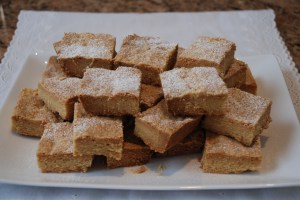
DSC_0310My saving grace was a yummy recipe for tray baked Irish Shortbread Biscuits found on the internet. It comes from Annaharvey Farm in Tullamore, County Offaly. I haven’t had the pleasure of staying at Annaharvey Farm or meeting proprietors Henry and Lynda Deverell yet but hopefully some day soon.

For those interested, Annaharvey Farm won the 2013 Georgina Campbell Award for Farmhouse of the Year. Henry and Lynda give the following five reasons why you should book a stay with them.

  • Cosy Farmhouse accommodation with great home cooked food.
  • Probably have the best riding school horses in the country available to clients.
  • Extensive cross country course over our 380 acre farm and woodland.
  • Enthusiastic and experienced instructors.
  • A warm welcome and a wonderful all round experience

If the welcome at Annaharvey Farm is as good as its shortbread, this is one guesthouse you ought not to miss!

Annaharvey Shortbread Biscuits

Makes 20-30

Ingredients

3 1/2 cups + 1 tablespoon/500g plain flour (if outside Ireland, use as All-Purpose flour)

2 1/3 cups/250g icing sugar (powdered sugar)

2 cups/250g corn flour (if outside Ireland, use Bob’s Red Mill Whole Grain Corn Flour)

2 cups + 2 tablespoons/500g melted butter

Directions

1. Preheat oven to 150°C/300°F/gas mark 2.

2. Sift all dry ingredients together.

3. Add melted butter and mix well.

4. Using your fingers, press the dough into a 9×13” or 10×15” baking tray or Swiss Roll tin.

5. Bake for 45-60 minutes. The biscuits should be a light golden colour on top.

6. Cut into squares while still hot and leave them to cool in the pan.

7. Sprinkle with a little sieved icing sugar before serving.

Read Full Post »

An Irish spring is always full of promise. The days are longer, daffodils dot the roadways with their bright yellow heads, ewes are birthing in fields not too far away, and there are several festive celebrations to carry us right up to summer. The first such event, Pancake Tuesday, takes place today.

IMG_3449Pancake Tuesday, also known in Ireland as Shrove Tuesday, is the Irish version of the widely known Fat Tuesday. It falls just before Ash Wednesday and marks the beginning of the Lenten season for Christians.

As with most things Irish, I learned of Pancake Tuesday from my lovely in-laws. My mother in law and sister-in-law make the lightest of pancakes and serve them up with a squeeze of lemon and a sprinkling of caster sugar. The recipe offered below is simply delicious and the one we follow in our Irish Home.

The custom of making pancakes, which actually resemble French crêpes, stems from the days when an Irish homemaker would rid her larder of eggs, sugar, butter and other dairy products so her family could fast for forty-plus days without temptation. Today Pancake Tuesday is less about theology and more about fun.

Known in Irish as Máirt na hInide, you’re sure to enjoy this sometimes-savoury, sometimes-sweet tradition in your home as much as we do in ours.

Simple Irish Pancakes

Serves Four

Ingredients

1 cup/120gm plain flour (self-raising flour)

Pinch of salt

2 large eggs, lightly beaten

8oz/200ml milk

1/3 cup/75ml water

4 tablespoons/2oz butter, melted

Directions

1. Sift the flour and salt into a medium size mixing bowl.

2. Make a well in the centre of the flour and the add eggs.

3. Add the milk and the butter and whisk.

4. Slowly add the water and continue to whisk until you have a thin batter that is free of lumps.

5. Melt some butter in a warm pan and, when bubbling, add a ladle of batter to the pan. Picking up your pan carefully, tilt it in a circular motion to spread the batter around.

6. Return your pan to the heat and allow the pancake to set. When lightly toasted, flip the pancake and allow the second side to turn a golden colour.

7. Remove from heat and cover with cling film (plastic wrap) until the batter is cooked up. Serve immediately, if possible, with one of the following fillings:

Sweet:

Lemon juice and caster sugar

Jam

Nutella

Stewed fruit

Bananas with toffee

Lemon curd

Cream and maple syrup

Savoury:

Chopped ham

Grated or crumbled cheese

Shredded salmon with capers and red onion

Spinach, bacon and mushroom

For more information about Irish pancakes and the Irish tradition of Pancake Tuesday, please visit these websites http://www.joe.ie/home/dumb-it-down/what-is-pancake-tuesday-noseriously-0021257-1

http://www.irishamericanmom.com/2012/02/19/irish-pancakes-for-shrove-tuesday/

http://marriedanirishfarmer.com/2011/03/08/fionns-sweet-carrot-pancakes/

Read Full Post »

Weekday mornings are a bit of a panic in our Irish home. Book bags, shoes, hair ties, racing for the car…wait!…”Did you finish your brekkie?”. Most days there’s no time for rashers and sausages and lovely eggs. Nope. Crack of dawn, Monday to Friday, we can be a slap, dash, thanks for the hash kind of family.

Maybe we should get up earlier? You know if I tried to push that agenda forward there would be a revolt in our Irish house!

So I’ve been thinking about breakfast a lot lately. You may have noticed that I posted a smoothie recipe last week {the first of many, I hope). While smoothies are great, I feel strongly they shouldn’t be the sole breakfast food at the start of every day.

What else will the family eat in the morning when we are short on time? Cereal…ok. Pancakes…out of the question! Porridge…better. We need something quick and healthy and yummy.

Thankfully I have a huge collection of cookbooks and handwritten recipes. Old and new, from all over the world, I’ve been buying, copying and gathering them since I was a blushing bride. I have so many books that they are not only stored in the kitchen, where there’s limited space, but our sitting room as well.

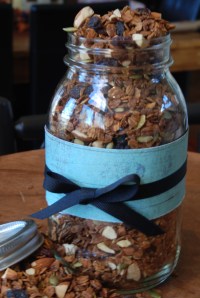
A lengthy search last week turned up what has proven to be a new winner in our house: muesli. The recipe chosen was handwritten quickly and given to us by our childminder, Nadia. Until now, I’ve never tried it.

Nadia’s muesli is easy to make. It has a slightly sweet, slightly salty flavour. The toasted rolled oats, pumpkin seeds and almonds make it oh so more-ish. And, maybe because it’s homemade, it doesn’t have any of that over-the-top sugariness. We’ve been serving it over Weetabix, Special K, yogurt and fresh fruit this week {not all at once, mind you!}.

The true test of success however has not just been in the empty breakfast bowls this week. I believe we’re on to a winner with Nadia’s muesli for two more reasons. Firstly, my oldest daughter asked me to put some in her school lunchbox for break time tomorrow. And secondly, my lovely Irish husband asked me to make a double batch when we got to the bottom of the jar this morning. I don’t know what you think, but I don’t need a fourth reason to make more of Nadia’s muesli.

I hope you try this recipe. You’re sure to love it and may even make it your own by adding a few different ingredients such as chocolate nibs, dried cherries, cystalised ginger, dried apricots or whatever catches your fancy first thing in the morning. Enjoy!

Nadia’s Muesli

Makes 5 cups/600 grams

Ingredients

1 teaspoon cinnamon

50 ml/¼ cup maple syrup

1 oz/¼ cup brown sugar

50 ml/¼ cup olive oil

½ teaspoon salt

1 teaspoon vanilla extract

340g/12 oz/3 cups rolled oats

86g/3 oz/½ cup raw almonds chopped in half (walnuts and pecans are nice too)

2 oz/¼ cup raw pumpkin seeds

1-2 oz/1/3 cup raisins

Directions

1. Preheat oven to 150°C/300°F.

2. Mix first 6 ingredients in a large bowl.

3. Add oats and mix to coat.

4. Spread mixture out on a large, rimmed, baking sheet. Bake for 25 minutes. Stir every 5 minutes.

5. Add the almonds and pumpkin seeds and bake for another 15 minutes. Continue to stir every 5 minutes.

6. Remove the hot muesli from the oven and allow to cool completely before adding raisins

7. Add raisins and store in a sealed container to keep fresh.

Read Full Post »

Apples in Our Kitchen Garden

In our kitchen garden we have two espaliered apple trees that are nearly twenty years old. I planted them myself when we finished building our home. For all those years, our little family has had delicious, sweet, juicy red apples to enjoy. Sadly, I never wrote down the names of the trees planted…all I know is they are Irish.

Apples have grown in Ireland for more than 3,000 years. It is said that St. Patrick planted apple trees and famously planted one at Ceangoba, an ancient settlement east of Armagh. Early monastic records show that monks ate apples with their meals and Brehon Laws (dating back 1,000-2,000BC) stated clearly that cutting down an apple tree was a crime.

Today the oldest apple variety still commercially grown in Ireland is the Bramley. It’s about 200 years old. It is the one we most often use for cooking: its tartness makes it an ideal choice for baking and its size makes it easy to work with. As good as it is, however, there are other apples in Ireland worth knowing.

In 2002 a group of Irish apple growers got together and started Celtic Orchards. Their goal is to provide the local economy with the best Irish grown apples. They grow Red Windsor, Red Elstar, Jonagored, Red Prince and about twenty other types.

Buttermilk Russet Apple

In the early 90’s, the Irish Seed Savers Association started searching for the last surviving traditional Irish varieties of apples and identified over 140 types that are still growing around the country today. With names like Bloody Butcher, April Queen, Irish Peach and Peasgood Nonsuch, it’s quite entertaining to read through the list.

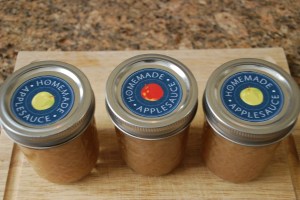
I wish our apples had clever names. Scratch that, I wish they just had names! Perhaps the thing to focus on is their taste. Our apples are delicious straight off the tree and they’re also good for juicing and making applesauce. At this time of year, I make a lot of both. My lovely my mother-in-law gave me her simple recipe for applesauce: apples, water and sugar – it’s that easy. This year I’ve taken the recipe one step further and added cinnamon. I’ve also started canning it.

What follows is Mama (pronounced like “Nana”) McGuire’s recipe and my instructions for canning. If you’re fortunate to have an apple tree growing in your garden or you see a well priced box of apples at the farmer’s market, I hope you’ll make your own applesauce. I guarantee that once you do, you’ll never see a need to buy it at the supermarket ever again.  Enjoy!

Homemade Applesauce

Makes 5 Quarts

Ingredients

16-18 pounds apples

4 cups water

juice of 1 lemon

1/2-1 cup sugar, to taste

1-2 tablespoon ground cinnamon (optional)

Directions

1. Prepare canner and sterilize jars by immersing in boiling water for 15 minutes. Keep jars in hot water until ready to use. Warm lids in a second pot of gently boiling water to sterilize.

2. Peel, core and cut apples into small chunks, removing blemishes and bruises.

3. In a large pot, bring apples, water, lemon and sugar to a boil. Reduce heat to medium-low, cover, and cook until apples are soft or fall apart, whichever you prefer. Stir occasionally to prevent scorching.

4. Once apples are soft, taste and add more sugar, if necessary. If you like your applesauce smooth, you may pass the cooked apples through a food mill or use an immersion blender or food processor at this point. Add cinnamon, if desired. Return applesauce to pot and keep hot. It’s important keep the applesauce hot.

5. Ladle applesauce into (hot) jars, leaving 1/2-inch of headspace. (Headspace is the space between the top of the applesauce and the top of the jar.) Do not overfill jars – leaving too little headspace may cause the applesauce to leak out of jars during processing and also when you remove the jars from the canner.

6. Slide a clean plastic knife along inside of jar to force air bubbles up and out of applesauce.

7. Carefully wipe the rim of jars with a clean cloth or kitchen roll (paper towel).

8. Take each lid out of the hot water and place it, rubber gasket side down, on each jar. Remove bands from the hot water and screw onto jars until fingertip-tight. Do not over tighten.

9. Carefully place jars in canner filled with hot water (also known as a “water bath”). Do not place more jars in canner than is appropriate – jars too close together may break during the processing.

10. Add more water, if necessary, to completely cover jars by at least 1-to-2-inches. Be sure to add more boiling water during the processing time to keep the jars covered.

11. Bring water temperature up to a rolling boil, cover pot and process for 20 minutes. If you are 1,000-3,000 feet above sea level, process for 25 minutes. If you are 3,000-6,000 feet above sea level, process for 30 minutes. If you are 6,000 to 8,000 feet above sea level, process for 35 minutes. And, if you are more than 8,000 feet above sea level, process for 40 minutes.

12. When the processing time is up, lift jars carefully from canner and place on a clean tea towel on the counter. Leave to cool completely – 12 to 24 hours. You will hear lids make a popping sound as the centre lid gets sucked down by the contracting air in the jar and seals. This is a very satisfying sound.

12. Test the jar lids to make sure proper sealing took place by depressing the centre of the lids. If the centre of the lid moves up and down, the jar did not seal correctly. Any jars that have not sealed properly should be stored in the refrigerator and the contents should be eaten within 1-2 weeks.

13. Properly sealed jars should be stored in a cool, dark, place for up to one year.

Notes:

1. If applesauce leaks out of a jar during the processing or while being removed from canner, allow it to cool completely and then check seal carefully. If seal is intact, consume the contents of that jar first.

2. If there is liquid at the bottom of your jar after processing, don’t worry. This sometimes happens, just stir the contents of the jar when you open it.

3. Follow processing time for your altitude.

4. If mold grows in the headspace of your sealed jar, do not eat the applesauce.

5. If the jar does not seal properly, refrigerate the jar and eat the applesauce within 1-2 weeks.

6. Cute labels for your jars may be found at: http://www.loveandoliveoil.com/2012/09/homemade-applesauce.html or http://www.according-to-kelly.com/2010/08/mason-jar-jam-labels/ and http://gardenofeatingblog.blogspot.com/2007/12/applesauce.html

Related Articles:

How to Make Applesauce (emmycooks.com)

Applesauce – or – “We’re never buying that again!” (smallworldsupperclub.wordpress.com)

An Appetite for Applesauce (wholefoodsmarket.com)

Read Full Post »

The Family Circle magazine cover that inspired a day of baking.

I know…I know, it’s not ideal to take long breaks from writing posts but {oh my} our summer has been such fun and I haven’t had a moment to write. From cruising to camping, and even some stand up paddle boarding in the Irish Sea, it’s been go…go…go. Finally the kids have just gone back to school which means things are finally slowing down. My head is screaming, “write girl, write”! So I guess that’s what I have to do…hold on folks, it’s back to life in the Irish fast lane!

This weekend my eldest decided she wanted to have a friend sleep over. Check. Then she and her friend decided they wanted to do some baking. Check, check! Whenever my eldest is willing to step into the kitchen, for something other than dinner, I get a little thrill. She’s not the “cooking” type (not yet anyway) and I want to encourage her as much as possible, even if afterwards it means my kitchen looks like a bomb struck.

The homemade version!

The baking challenge the girls took on was recreating adorable cupcakes inspired by those on the cover of Family Circle magazine in April 2008. Yes, I keep magazines forever but THIS is exactly why…you just never know when a picture or article will inspire a moment. The girls saw these playful cupcakes and knew they had to make them.

Being kids, the girls dispensed with the directions immediately. First and foremost, they wanted to have fun. Second, I was told making cupcakes from scratch would take too long. Third, they just wanted to “do their own thing”! Check, check, check. The girls wrote their shopping list, got some cash from Dad, jumped on their bikes and cycled to the local supermarket for some ingredients. An hour-and-a-half later, they made it home with smiles on their faces (remember when grocery shopping used to make you happy?!) and started baking.

Recipe from Family Circle 2008

The afternoon passed with the smell of vanilla wafting through the air and the sound of laughter and “girl-talk” flowing easily. It didn’t matter that a quarter of the cupcakes looked more like messy mutts than pretty pupcakes. What was most important was two young friends spent time in the kitchen and had a ball. I think you’ll agree the results were pretty sweet.

Recipe – The picture (left) is from Family Circle magazine. If you click on the image, you can read it more clearly. The article was inspired by the book Hello, Cupcake! by Karen Tack and Alan Richardson. If the recipe seems long, by all means “wing it” as my daughter did and use the photos from the article for inspiration.

Related Bits & Bobs to Inspire You:

Website and idea extravaganza from Karen Tack and Alan Richardson, creators of The New York Times bestseller Hello Cupcake – http://www.hellocupcakebook.com/Hello_Cupcake_Book.html

Hello, Cupake!…The App – http://itunes.apple.com/us/app/hello-cupcake!/id463891492?mt=8

Video Interview with Karen Tack, author or Hello Cupcake!, What’s New Cupcake?, and Cupcake, Cookies and Pie, Oh My! –http://www.marthastewart.com/search/apachesolr_search/hello%20cupcake

Cupcakes in Dublin, Ireland at A Cupcake Review (greenseggsandhamstrings.wordpress.com)

How to Frost Cupcakes http://www.huffingtonpost.com/2012/09/03/frosting-cupcakes_n_1846665.html

Nutella Cupcakes http://blogs.babble.com/family-kitchen/2011/05/06/nutella-cupcakes-with-nutella-buttercream/

Read Full Post »

Spring has finally sprung in the Rockies and Ireland and with it has come the first new shoots of mint. The only other edible plant currently of use in our garden just happens to be rhubarb. Hmmm…mint & rhubarb, rhubarb & mint…what’s a girl to do?!

Fortunately, a few weeks ago, Caroline over at Grow It Cook It Can It  posted an article called Mint Syrup & Rhubarb Mojitos. Oh, thank you, thank you, Caroline! I believe I am saved.

Yes, with Caroline’s recipe in one hand and a few pots and pans in the other, I’ve been making mint syrup and Rhubeena (think Ribena but made with rhubarb instead of blackcurrant) every few days for the past week. The two syrups, when combined with seltzer water, some crushed mint, lime and a splash of rum (or not), make a really refreshing cocktail, just perfect for spring.

Rhubarb Mojitos with Mint a la Caroline

Makes 2

Ingredients

ice & seltzer water

2 ounces rhubeena

1 ounce mint simple syrup

6 or 7 fresh mint leaves

3/4 of a lime

1 ounce rum (optional)

Directions

Cut the lime into wedges.  In a pint glass, combine the rhubeena, mint syrup, and rum.  Squeeze the lime wedges into the glass to release the juice and then throw them right in there with everything.  Add the mint leaves.  Add some ice.  Top with seltzer water.  Mix well.

Note: If you make your own Rhubeena be sure to save the pulp…it’s delicious over vanilla ice cream.

Read Full Post »

« Newer Posts - Older Posts »